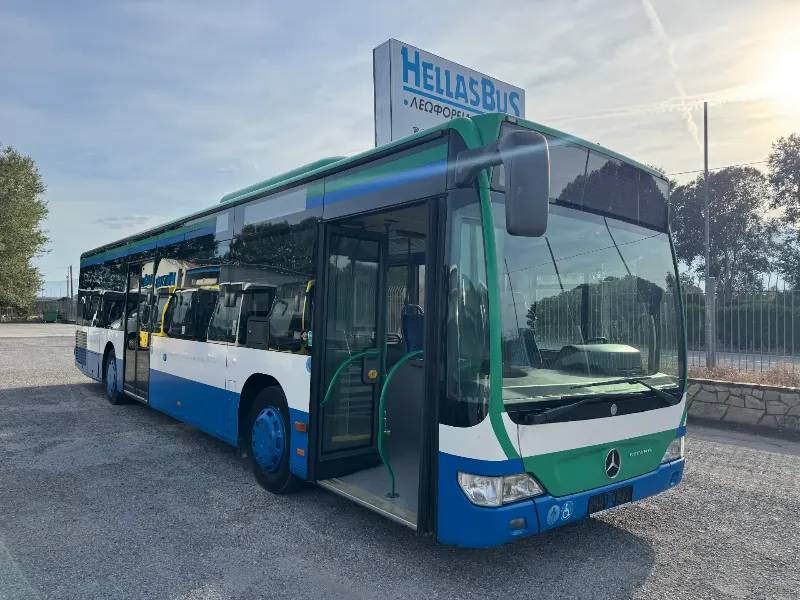
City bus
MERCEDES-BENZ CITARO
- Year of manufacture
- 2010
- Mileage
- 585,095 km
- Gearbox
- AUTOMATIC
- Emission class
- EURO 5
€16,900 + VAT
More...
Explore the history of Greece's KTEL buses, from independent operators to regional networks, and their role in connecting villages, families and communities.
 The HellasBus team 7 min read
For someone waiting at a village bus stop, an arriving coach can mean a job in town, a doctor’s appointment, the beginning of university life or a journey home. The same door opens onto different lives. A departure that occupies one line in a timetable can hold a person’s whole day together.
That is where KTEL belongs in the story of rural Greece. Understanding its history means looking beyond the main highways: towards the road from a village to its nearest town, school bags, suitcases and parcels sent home.
KTEL means Joint Bus Receipts Fund, from the Greek Koino Tameio Eisprakseon Leoforeion. Historical sources also use Eisprakseos. In 1952, Law 2119 established 104 KTEL organisations: 59 intercity and 45 urban. This was the institutional beginning of a name that became part of everyday Greek speech. [2]
The word “joint” explains the organising idea. Ticket receipts went into a shared fund and were distributed among participating operators according to rules. Each operator’s income no longer depended solely on receipts from their own route. Cooperation made more coordinated transport possible. [12]
KTEL developed through local organisations that brought bus owners together and coordinated the routes of each area. Every place contributed its own journeys to this shared history. [5] [11]
Intercity buses preceded KTEL. In the early twentieth century, an individual vehicle could be an independent business. Regulations appeared in the 1920s, followed by joint urban and intercity bus administrations from 1937. War interrupted that development, and reconstruction followed. [1]
Western Crete offers a local starting point. KTEL Chania–Rethymno dates the arrival of bus transport there to 1927, with handcrafted vehicles and initially limited services. The network grew gradually with the means available. [4]
KTEL Magnesia preserves a particularly vivid detail: before formal organisation, some operators collected fares in hats. In 1948, the Pelion routes had 24 buses with 19 or 24 seats. In 1952, routes serving Pelion, Larissa, Athens, Kanalia and Almyros came together in KTEL Magnesia. Small, independent services were acquiring a shared structure. [3]
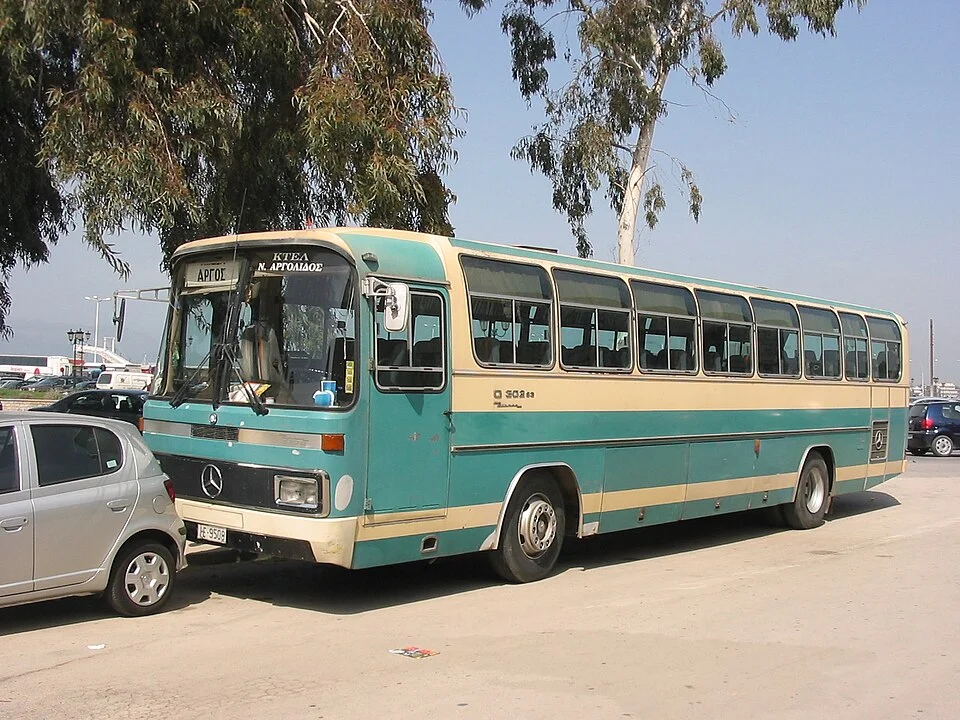
Their structure continued to evolve. On 1 February 1968, intercity KTEL organisations in mainland Greece and Crete were merged into eight regional bodies known as KTEYL. In 1973, Legislative Decree 102 restored organisation at prefecture level. Achaia’s history records these changes explicitly. [5]
Law 2963/2001 later provided the framework for conversion into joint-stock companies. Buses could be contributed to company ownership or retained by their owners and leased to the company. Conversion took place on different dates: Thessaloniki’s new company was established in August 2003. [7] [6]
Behind the legal forms was a practical task: organising vehicles, people and departures to maintain connections. For passengers, the changes that mattered most were those they experienced on their journeys.
Katerini’s urban bus history began in the mid-1950s with the bus owners’ cooperative “Agia Aikaterini”. On 1 October 2003, the operator adopted the name “Astiko KTEL Katerinis S.A.”, continuing its connection with everyday life in the city. [13]
A photograph from 1969 preserves part of that history: the second MAGIRUS 150E10 BELO, carrying windscreen fleet number 15, of Katerini’s urban KTEL. Its owner, Panagiotis Kateriniotis, stands on the left, with Apostolos Vavatsioulas on the right. The bus and the people beside it preserve a moment from an era when the city’s journeys were written on the road each day. [14]
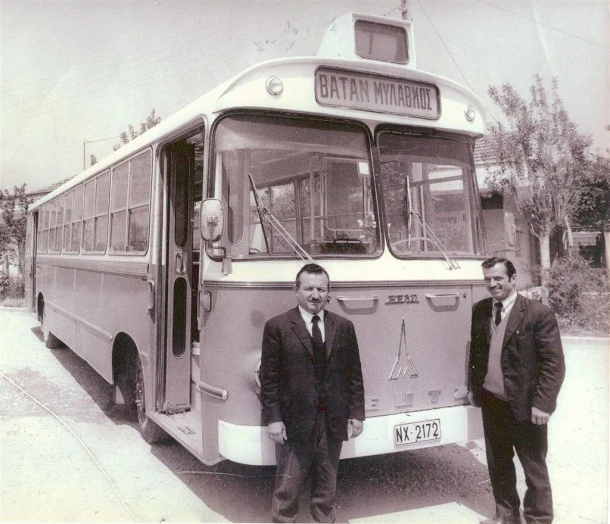
Today, the connection with passengers continues through timetable information and real-time arrival information at bus stops. The old photograph and modern services represent two moments in a journey that remains closely linked to Katerini. [15]
Rural routes with low passenger demand connect smaller communities with nearby towns and larger centres. For residents, regular bus transport provides access to shops, services and the everyday life of the region. These connections form an important part of KTEL’s social role. [1]
For someone without a car, the morning bus makes it possible to reach the nearest town, finish their errands and return home. As the journey becomes familiar, the stop and the bus become reassuring parts of everyday life.
The value of that connection is visible in the passenger reaching their destination. For an older resident wishing to remain in their village, travelling to the nearest town maintains contact with people and services and supports everyday independence.
The western Cretan operator’s history connects its work with carrying pupils and serving remote villages throughout the year. It also records expansion towards Thessaloniki and Ioannina, where people from the region studied and worked. The village journey and the long journey to another part of Greece met within the same network. [4]
A school bag held on a lap, a first suitcase for university, a few days back at the family home: these images belong to the story of KTEL. They hold the anticipation of departure, a family’s care and the happiness of returning.
A bus allows a family to organise life across places some distance apart. Access to work and education, and the possibility of returning, give transport a significance beyond the hours spent travelling.
KTEL’s work also includes parcel transport. Karditsa’s official service covers intercity and local connections. Kilkis likewise records transporting parcels and envelopes on its scheduled routes. [8] [11]
A parcel has a sender and a recipient, but it can also carry the care of someone far away. A practical service takes on a familiar human meaning: someone was waiting for something, and the bus brought it closer.
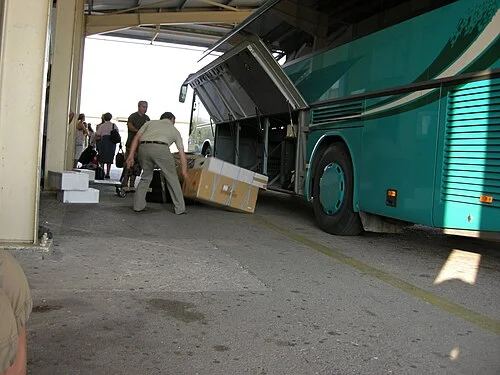
On 6 August 2021, KTEL Rodopi announced free transport of humanitarian aid for people affected by the fires in Attica, placing its routes at the service of solidarity. [9]
On 14 November 2023, the cultural association of Sarakatsani living in Thrace publicly thanked the same operator for transporting supplies it had collected for flood victims in Thessaly free of charge. The contribution connected people gathering aid with those who needed it. [10]
Both cases reveal a capacity already present in everyday operations. A station, a luggage hold and people who know how to get a consignment to its destination can connect someone wishing to help with someone waiting for help.
From the earliest handcrafted vehicles to newer coaches and electronic tickets, KTEL’s history follows the evolution of travel. Coordinated routes, fleet renewal and digital services continue the work begun by the first bus operators. [4] [6]
The passenger remains at the centre of that journey: the pupil, the worker, the visitor and the person going home. New services make travel easier to arrange while maintaining the same purpose: bringing people together.
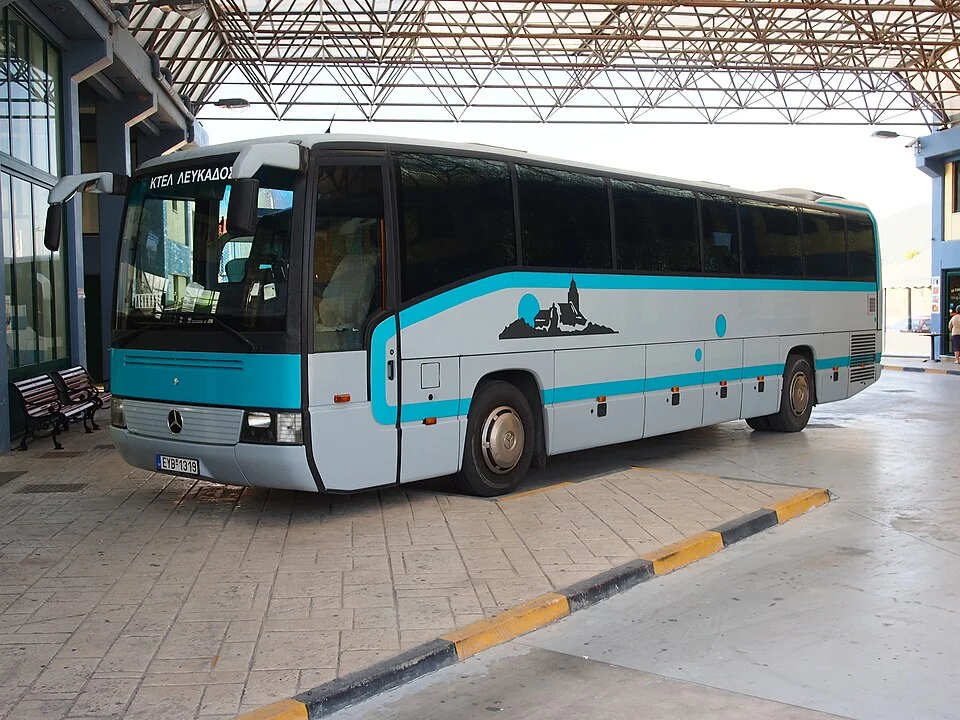
HellasBus has separate guides to the differences between urban buses, intercity buses and coaches and the everyday care practices used by drivers.
At a major terminal, a departing coach is one of many. At a small village stop, its arrival can make the rest of the day possible. From one end of the route to the other, that connection remains the most human measure of KTEL’s history.
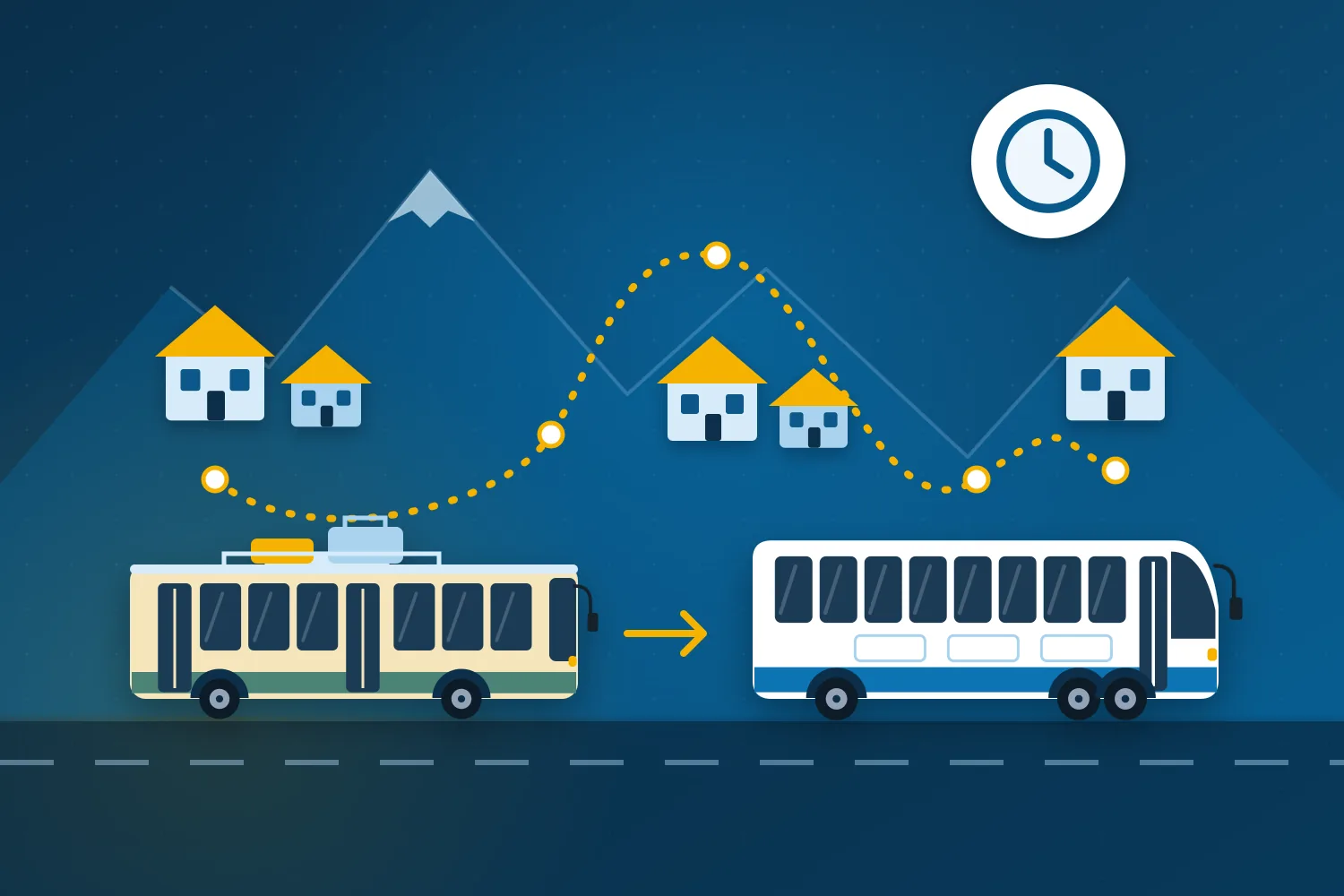
Cover illustration: HellasBus. The CC BY-SA photographs remain available under that same licence.
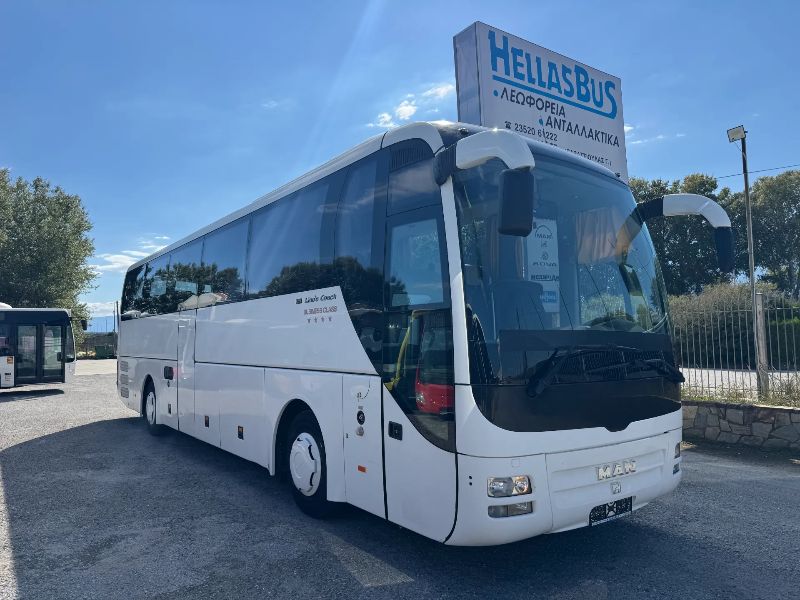
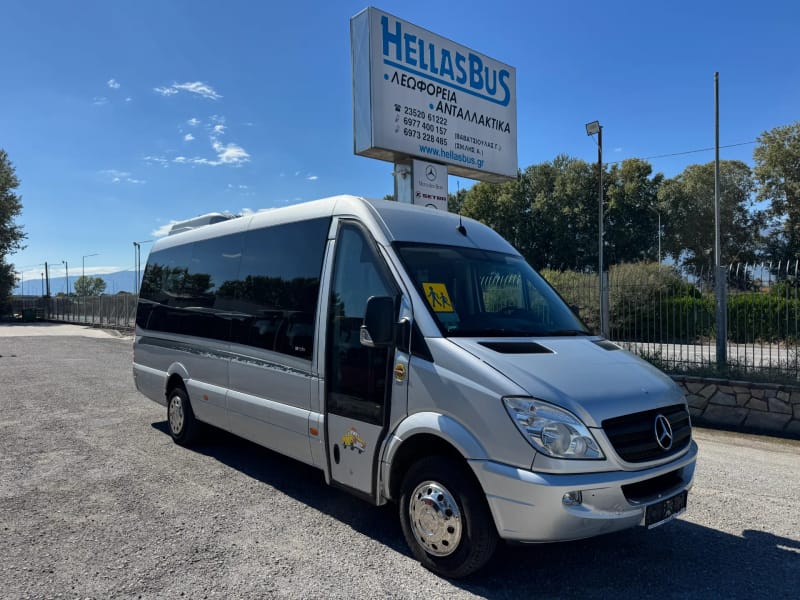
Buses we own, parked at our premises in Litochoro, Pieria, ready to be inspected.
City bus
€16,900 + VAT
More...Intercity / tourist coach
€51,900 + VAT
More...Intercity / tourist coach
€29,900 + VAT
More...KTEL stands for Koino Tameio Eisprakseon Leoforeion, meaning Joint Bus Receipts Fund. Historical sources also use the Greek form Eisprakseos. The name reflects the operators' shared organisation and pooling of receipts.
KTEL organisations were established in 1952 under Law 2119/1952. Their predecessors included independent bus businesses and joint bus administrations dating from the 1930s.
They connect places with low passenger demand to larger centres. For people without a vehicle, that connection provides access to school, services and everyday necessities.
 News / Updates
 14 min read
The KTEL bus tenders in 11 Greek regions: Law 4974/2022, deadline extensions, contract values, award criteria and the fleet required (age, Euro class, access).
Read the article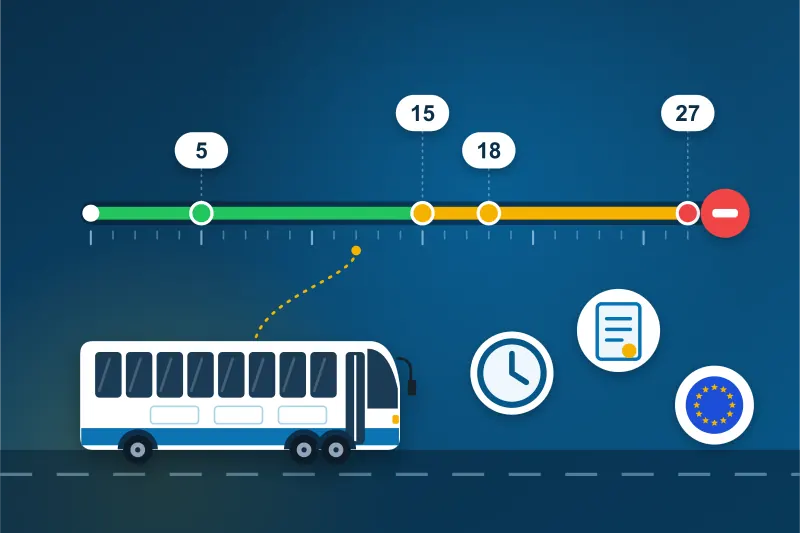 Buying a bus
 13 min read
The maximum age at which a KTEL or tourist bus can enter service in Greece, when it must retire, how age is counted and what applies to imports, with the laws.
Read the article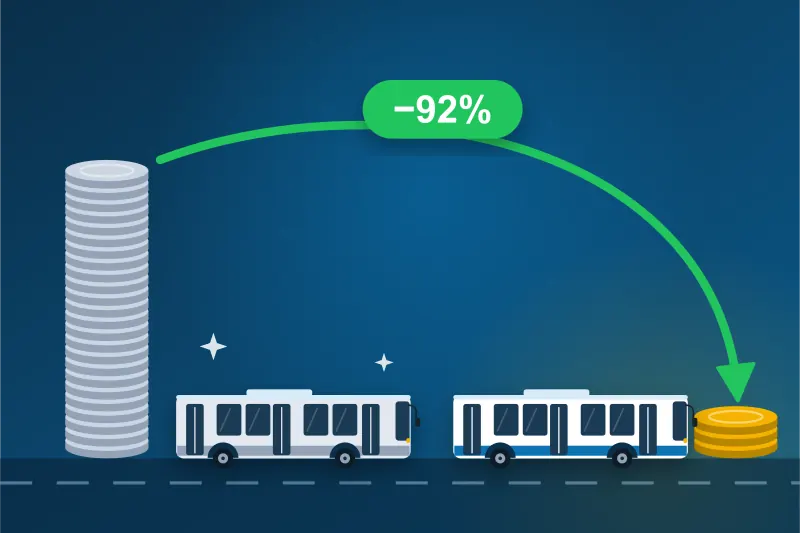 Buying a bus
 8 min read
A new Citaro costs €296,000 or more excl. VAT. A used Citaro city bus costs about €25,000. Tender prices, listings, interest, depreciation and payback compared.
Read the articleCall or message us: we tell you what we have in stock and search for what we do not.