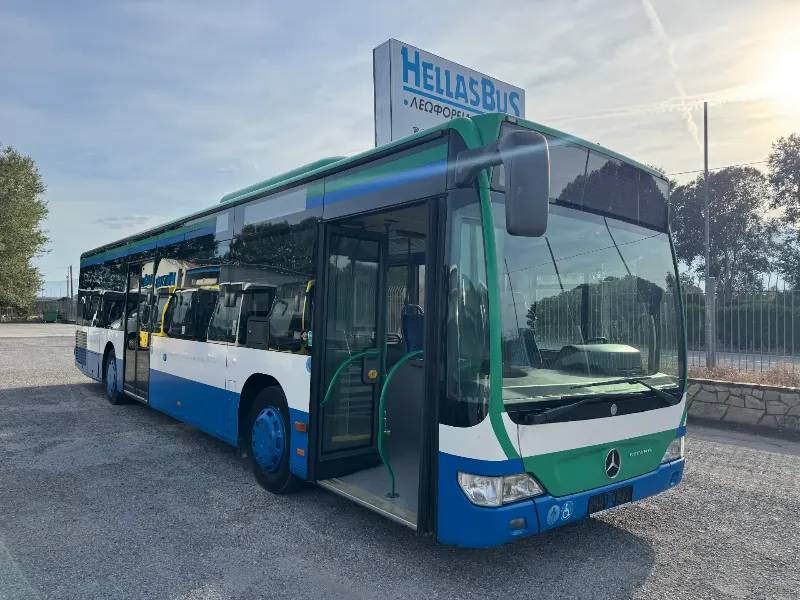
City bus
MERCEDES-BENZ CITARO
- Year of manufacture
- 2010
- Mileage
- 585,095 km
- Gearbox
- AUTOMATIC
- Emission class
- EURO 5
€16,900 + VAT
More...Mon-Fri 08:00-17:00 · Sat 09:00-15:00 23520 61222 6977 400157 6973 228485

12 tricks experienced bus drivers know: air pressure, retarder, tail swing in turns, vehicle height, tachograph, AdBlue in winter, and the reason behind each.
 The HellasBus team 7 min read
The tricks experienced bus drivers rely on are mostly habits. They walk around the vehicle before starting, wait for the air pressure, use the retarder from the top of the descent, watch the tail in turns and plan their breaks properly. These habits cost very little time and save you breakdowns, fines and bad moments with passengers.
We have collected twelve of these tips, each with the reason behind it. They apply to city buses, intercity buses, coaches and minibuses, and they are also useful for owners who train new drivers.
A walk around the bus catches in two minutes the problems that cost hours on the road, such as a soft tyre, an oil stain on the ground, a blown lamp or an open luggage hatch. Do it every morning and after every long stop.
Look under the vehicle for drips. Black is usually engine oil, green or pink is coolant and red is gearbox oil. Check that all the wheel nuts are in place and that the mirrors haven’t moved overnight. Inside, glance at the emergency hammers, the fire extinguisher and the first-aid kit, and make sure luggage isn’t blocking the emergency exits.
Air works the brakes, the suspension, the doors and often the gearbox. If you set off before the low-pressure warning goes out, the brakes don’t have their full force and the suspension may not have reached the right height.
While you wait, listen to the system. The periodic “psst” once the air tanks are full is the air dryer purging moisture, and it is a good sign. If the air takes much longer than usual to build, tell your mechanic.
Switch the retarder on at the top of the descent, before your speed climbs, and save the brake pedal for the final stop. That keeps the brakes cool and ready for an emergency.
On long descents, such as Greece’s mountain roads, friction brakes heat up and lose effect if they work continuously. The retarder heats the coolant, so keep an eye on the temperature gauge too. With a manual or automated gearbox, a lower gear helps the engine brake.
You warm it up by driving gently for the first few kilometres, without high revs or full load. Long idling to warm the engine wastes fuel and, on Euro 6 buses, fills the particulate filter faster.
The oil needs a few minutes of driving to reach every part at the right flow. In the same time the gearbox and the differential warm up as well. Let the air build, set off and drive gently until the temperature rises. In winter, give the engine a few more minutes before you push it on a climb.
After a climb or a fast motorway run, let the engine idle for a short while before you switch it off. The turbocharger spins very fast and runs hot, and the oil that circulates while the engine is running cools it.
If you switch off at once, the oil sits still inside the hot turbo. Over time this wears its bearings. The time you need to pull into the car park and stop calmly is usually enough.
In tight turns the rear of the bus swings outwards, to the opposite side from the direction you are turning. Before you turn, check the mirror on the outside of the turn as well.
On 13- and 14-metre coaches with a long rear overhang, the tail can hit a post, a parked car or a pedestrian on the pavement. Three-axle buses with a steered rear axle behave differently, so try the vehicle in an empty area before you take it into narrow streets. When reversing, have someone guide you from behind, always standing where you can see them in the mirror. If you can’t see them, stop.
Adjust the mirrors or camera screens before you set off, so that you can see the side of the bus and the lane next to you. A bus has large blind spots, especially at the front right and at the rear.
If the bus has a blind-spot system, such as Mercedes-Benz Sideguard Assist, learn what warnings it gives and leave it switched on. On buses with MirrorCam, get used to the screens in an empty area before you go out on the road.
A high-floor coach is around 3.6 to 3.7 metres tall. The third-generation Tourismo, for example, is 3.68 m high. Bridges, tunnels, hotel garages and filling stations with low canopies often have limits below that.
Write the vehicle height on a label in front of the driver, together with the length and weight. Abroad, height signs show metres, and in some countries feet. If you drive different vehicles, don’t rely on memory.
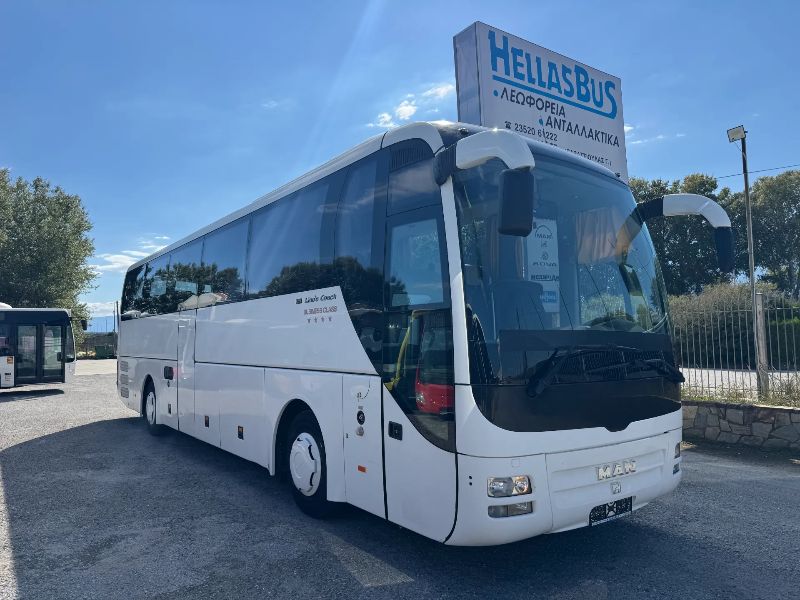
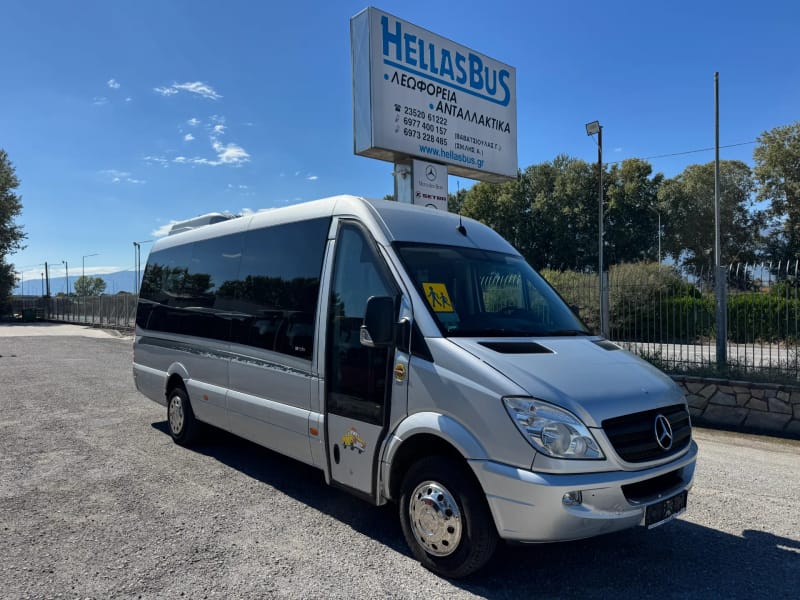
Buses we own, parked at our premises in Litochoro, Pieria, ready to be inspected.
City bus
€16,900 + VAT
More...Intercity / tourist coach
€51,900 + VAT
More...Intercity / tourist coach
€29,900 + VAT
More...Plan the route so that 4.5 hours of driving are followed by a 45-minute break, which can be split into 15 and 30 minutes. Under Regulation (EC) No 561/2006, daily driving is up to 9 hours, and up to 10 hours twice a week.
The trick is the split break. A 15-minute stop while passengers have coffee and a 30-minute stop later cover the rule without upsetting the schedule. Insert your driver card correctly in the tachograph at the start of the day and check the tachograph clock. The digital tachograph required by Regulation (EU) No 165/2014 records driving, breaks and kilometres, so anything you don’t enter correctly shows up at an inspection.
AdBlue freezes at −11 °C, but vehicles with SCR have heating that thaws it after start-up. Never add water or antifreeze to the AdBlue tank, and fill only from a pump or a sealed container.
Diesel also turns cloudy in severe cold and clogs the filters. If you are taking a group to a ski resort or to a cold country, fill up there with the winter diesel sold at local filling stations.
The battery isolator switch cuts power to the whole vehicle while it stands parked. Modern buses have many electronic systems that draw current even when switched off, and one weekend is enough to drain a tired battery.
Before you switch it off, wait as long as the manufacturer specifies after shutting down, because some systems, such as AdBlue, finish their routines after the ignition is off. Also learn where the emergency door valves are. In a breakdown or an evacuation, you have to open the doors without power or air.
Start the air conditioning with the doors closed a few minutes before passengers board, and clean the filters regularly. A bus that has stood in the July sun needs time to cool down.
Don’t set the temperature too low. A big difference from the outside temperature tires passengers at stops and loads the compressor. At stops where the doors stay open for a while, close the doors you don’t need.
For the maintenance your mechanic carries out, see our 10 maintenance tips for a used bus. For the models, read about the Tourismo and the Citaro.
If you are looking for a bus, the HellasBus catalogue has city buses, intercity buses, coaches and minibuses in Litochoro, Pieria, ready for registration. Call +30 23520 61222 or send a message on WhatsApp (+30 6977 400157).
Under Regulation (EC) No 561/2006, daily driving time is up to 9 hours and can be extended to 10 hours twice a week. After 4.5 hours of driving, a 45-minute break is required, which can be split into 15 and 30 minutes. Weekly driving may not exceed 56 hours, or 90 hours over two consecutive weeks.
It is usually the air dryer purging moisture when the pressure regulator stops charging the air tanks. This is normal. If you never hear it, or you hear a continuous hiss, have the air system checked.
AdBlue freezes at −11 °C. Vehicles with SCR have heating in the tank and the lines, so it thaws after start-up. Do not add water, antifreeze or any other fluid to the tank.
 Maintenance and tips
 7 min read
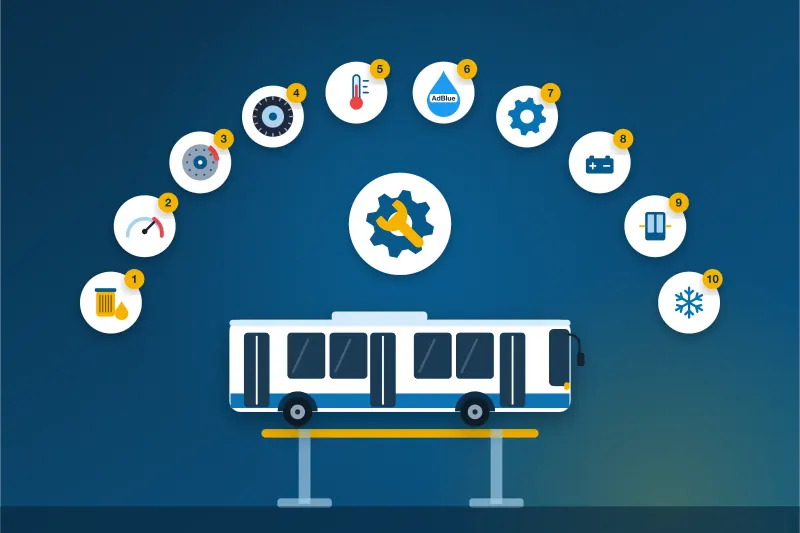
10 maintenance tips for a used bus covering oil, air system, brakes, tyres, cooling, AdBlue, gearbox, batteries, doors and rust, with the reason for each one.
Read the article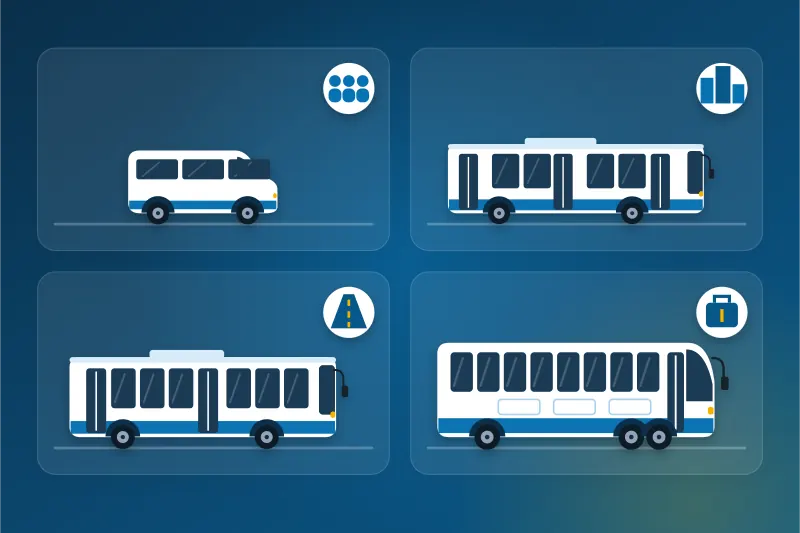 Buying a bus
 7 min read
City bus, intercity bus, coach or minibus: differences in floor, doors, seats, luggage and the Class I, II, III categories, and which type fits your business.
Read the article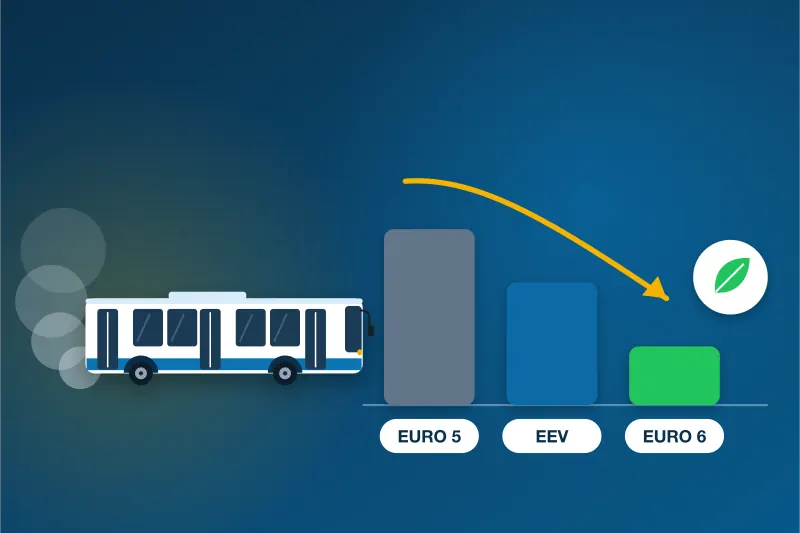 Buying a bus
 6 min read
Euro 5, EEV and Euro 6 buses compared: NOx and particulate limits, key dates, AdBlue, particulate filters and what each class means when you buy a used bus.
Read the articleCall or message us: we tell you what we have in stock and search for what we do not.