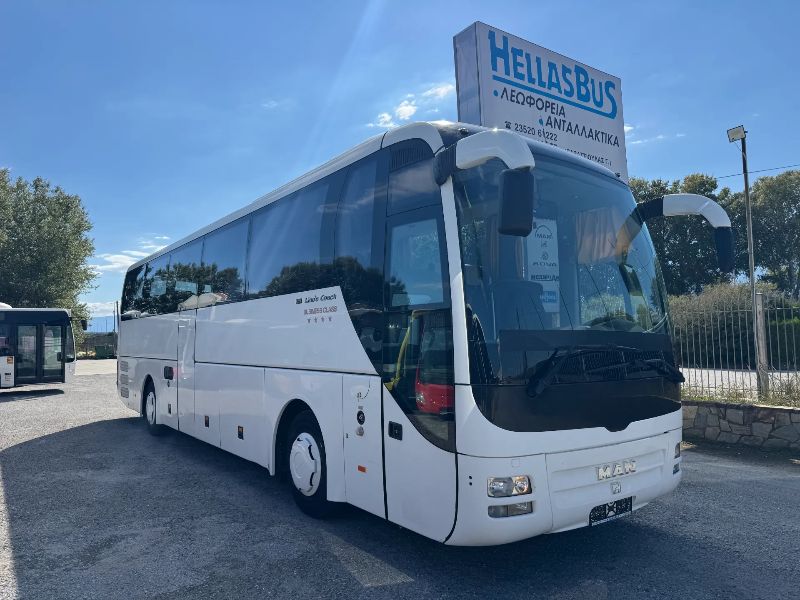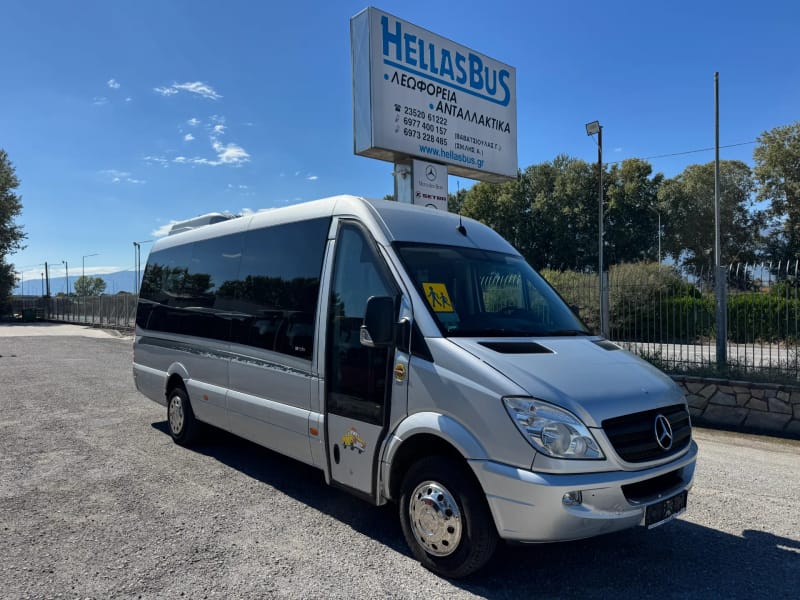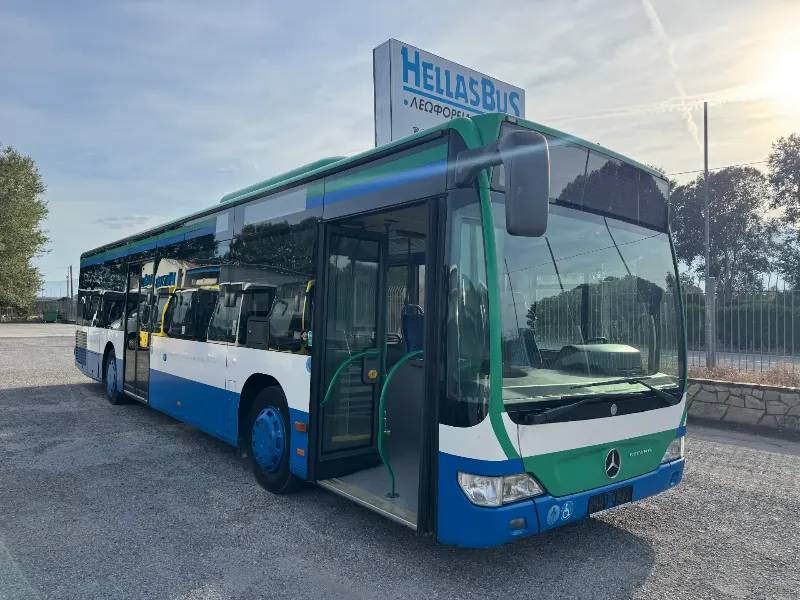
City bus
MERCEDES-BENZ CITARO
- Year of manufacture
- 2010
- Mileage
- 585,095 km
- Gearbox
- AUTOMATIC
- Emission class
- EURO 5
€16,900 + VAT
More...
The maximum age at which a KTEL or tourist bus can enter service in Greece, when it must retire, how age is counted and what applies to imports, with the laws.
 The HellasBus team 13 min read
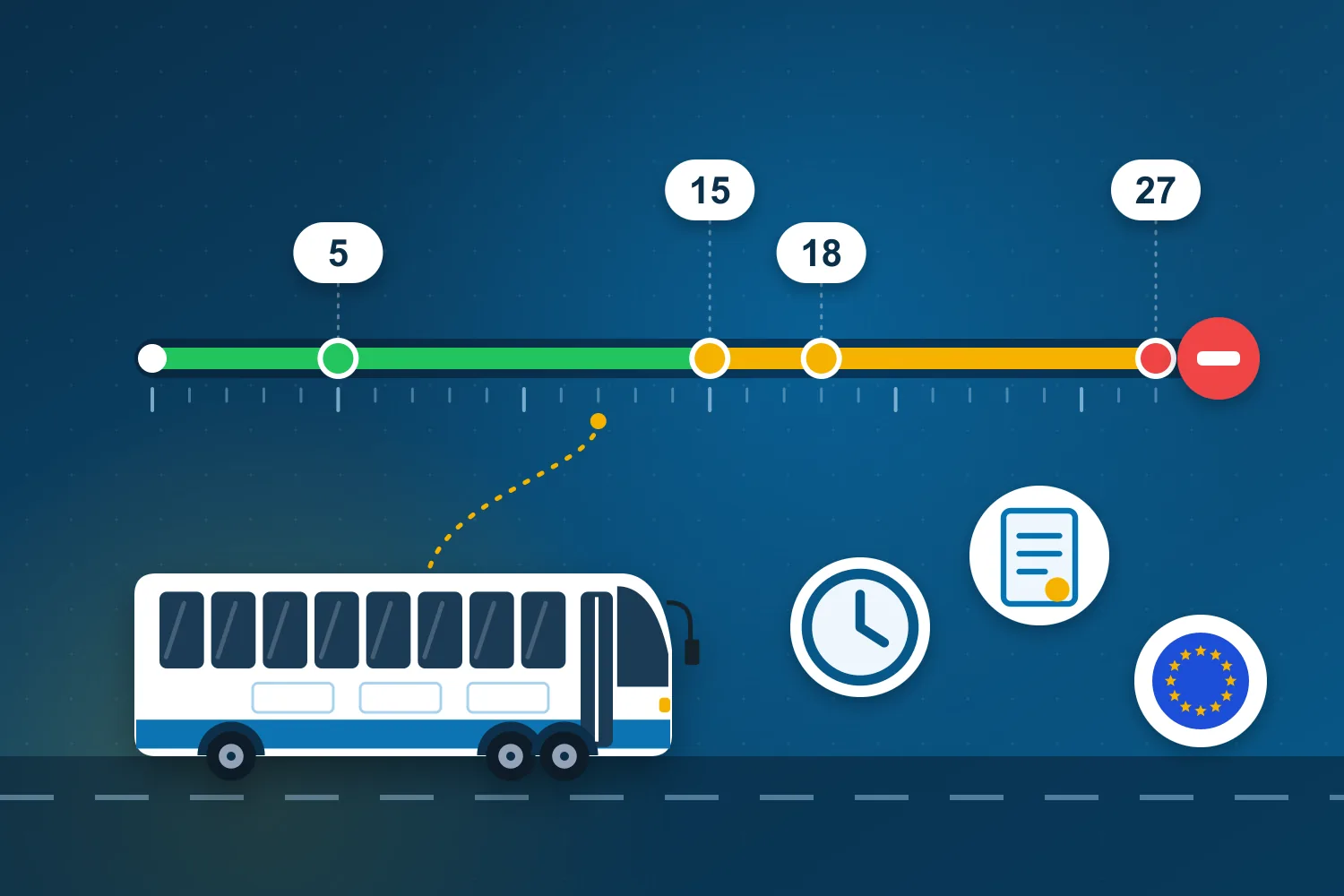
Under the current framework, the general retirement limit for KTEL buses is 27 years. When services start under the new contracts awarded through the tenders, the contractor’s fleet must meet the 25-year limit. Until then, the existing KTEL operators continue under the current framework.
First entry into the relevant category in Greece has different limits: 15 years for intercity and 18 for urban buses, with an exception for a replacement bus already operated in Greece in the same category. Public-use tourist buses also have a general retirement limit of 27 years, while first entry is allowed up to 5 or 15 years depending on the case.
If you are buying a used bus, these numbers decide whether the vehicle can do the work you want and for how many years. Below is what applies in October 2026, with the article of law behind each rule.
The table brings together the general limits under the current framework. “Entry” is the maximum age at which a bus, new or used, can enter the relevant category in Greece for the first time. “Retirement” is the general age limit. The fleet limits under the new KTEL contracts are explained separately below.
| Category | Entry (maximum age) | Retirement | Legal basis |
|---|---|---|---|
| Intercity KTEL, first entry into the category in Greece | 15 years | After 27 years | Article 11(1), Law 2963/2001 |
| Urban KTEL, first entry into the category in Greece | 18 years | After 27 years | Article 35, Law 4530/2018 and Article 11, Law 2963/2001 |
| Public-use tourist bus as a replacement (the old one reached 27 or was declassified after 5 years) | 15 years if entering tourist use for the first time, up to 27 if already a tourist bus | After 27 years | Article 8, Law 711/1977 |
| Public-use tourist bus in a new entry or a replacement within the five-year period | 5 years (used from Greece or the EU/EEA) | After 27 years | Articles 7 and 8, Law 711/1977 |
Exception for KTEL replacements: a used bus already operated in Greece as intercity, semi-urban or urban respectively can replace a bus in the same category before reaching 27 years, subject to the required technical inspection and safe-operation conditions. Buying it in Greece alone is not enough: a change of category is subject to the first-entry limit of 15 or 18 years. This distinction is explained in the Sygkoinoniaka Nea analysis.
This article is not legal advice. The rules change often through amendments, so before a purchase confirm your case with the Transport Department of your Region.
For both KTEL and tourist buses, the law counts age “from the year the chassis was built, not including that year”. What counts is not the date of first registration or the day you buy it, but the year the chassis was built.
“Not including” means the year of manufacture itself does not count. Example: a bus with a chassis built in 2011 counts its years from 2012 and reaches 27 years on 31/12/2038. This illustrates the general age limit and does not guarantee eligibility for every service until that date: a new KTEL contract may require earlier replacement. The simple rule for the general limit is: year of manufacture + 27, on 31 December of that year. In borderline cases, confirm the date with the Transport Department before you pay a deposit.
You will find the year of manufacture on the registration certificate, on the certificate of conformity (COC) or from the chassis number (VIN). Don’t confuse it with the year of first registration, which for buses sold from stock can be one or two years later.
A bus first entering service in Greece in the intercity or semi-urban category must be up to 15 years old, whether new or used. Replacement with a used bus already operated in Greece in the same category follows the exception explained above. The general retirement limit remains 27 years under Article 11(1) of Law 2963/2001, as replaced by Article 119 of Law 4070/2012.
The same rule applies to buses first registered abroad, because the law refers explicitly to a first registration “in Greece or abroad”. Until 2012 the retirement limit was 23 years. Law 4070/2012 raised it to 27.
If a KTEL bus is off the road for more than 4 months because it has passed the limit, its registration is revoked (Article 31 of the same law). For you as a buyer, this means a retired KTEL bus does not go back into service on a route.
For urban KTEL buses, first entry into the category in Greece is allowed up to 18 years (Article 35 of Law 4530/2018), and the general retirement limit is 27 years, as for intercity buses. The replacement exception also applies to a used bus already operated in Greece as an urban bus. An imported used city bus, such as a Citaro or a MAN Lion’s City, can therefore enter at an older age than an imported intercity bus.
The change from 27 to 25 years takes effect when services start under the new contract. Until then, the existing KTEL operators remain subject to the general 27-year limit. Publishing a tender alone does not change the limit for the existing services.
For the fleet operating under the new contract, the consolidated Central Greece tender (28.5.2026) specifies:
| Case | Contractual age limit |
|---|---|
| Every bus throughout the contract | Up to 25 years, or a lower limit if the contractor committed to it |
| A bus added or used as a replacement during the contract | Up to 18 years |
These limits govern the contracted services and do not raise the current first-entry limit for an imported bus. Before buying, check the specific tender and the maximum age the contractor committed to. See our guide to KTEL tenders for details.
For public-use (Δημόσιας Χρήσης) tourist buses, the entry limit depends on whether the bus replaces another one and why. The retirement limit is the same for all: after 27 years from the year the chassis was built, the bus is retired, removed from the special register and cannot work as a public-use tourist bus again (Article 7 of Law 711/1977, as amended by Laws 4663/2020 and 4811/2021).
An owner who holds a public-use tourist bus licence has the right to replace the bus in three cases (Article 8 of Law 711/1977). The case decides which bus can take its place:
| Case | What can take its place |
|---|---|
| a. The bus reached 27 years and its licence expired | A new bus, a used bus already running as a tourist bus and no older than 27 years, or a bus entering tourist use for the first time up to 15 years old |
| b. Declassification after 5 years from entry into service | As in case a |
| c. Declassification before 5 years | New, or used from Greece or the EU/EEA, up to 5 years old |
“Entering tourist use for the first time” covers, for example, a bus imported from an EU or EEA country or a Greek intercity bus. In this case the law also requires accessibility for passengers with disabilities. For a new entry into service that does not replace another bus, new buses or used ones from Greece or the EU/EEA up to 5 years old can enter (Article 7(1)).
The replacement can take place at any time before the bus reaches the age limit. According to the Transport Directorate of the Region of Crete, the application to approve the replacement is filed within one year of the bus reaching the age limit. Registration of the new bus must be completed within two years of the approval. For a used bus from abroad, the documents required include:
The detailed procedure is set by ministerial decision. So ask the Regional Tourism Service and the Transport Directorate of your Region before you buy.
The criterion has changed several times over the years:
In October 2026 tourist bus owners in Crete asked for a two-year extension to the retirement limit. So far the request has not become law.
Buses we own, parked at our premises in Litochoro, Pieria, ready to be inspected.
City bus
€16,900 + VAT
More...Intercity / tourist coach
€51,900 + VAT
More...Intercity / tourist coach
€29,900 + VAT
More...No. From 2020 to 2024 the retirement limits were suspended several times because of the pandemic and the crisis in tourism. The last suspension, under Article 61 of Law 5079/2023, covered, among others, KTEL and tourist buses that reached the limit during 2022 and 2023, and it expired on 30 April 2024.
As of October 2026 we have not found any newer extension. If you see an advert saying that a 27-year-old bus “runs under an extension”, ask for the Government Gazette (ΦΕΚ) issue that grants it.
For registration as such, we did not find a general age limit. The limits apply when you want to put the bus on a KTEL route or make it a public-use tourist bus:
| Use in Greece | Maximum age of imported bus | From where |
|---|---|---|
| Intercity KTEL | 15 years | Any country, meeting Greek specifications |
| Urban KTEL | 18 years | Any country, meeting Greek specifications |
| Public-use tourist as a replacement (cases a and b) | 15 years | EU/EEA |
| Public-use tourist in a new entry or a replacement within the five-year period | 5 years | EU/EEA |
For urban or intercity use, a used bus from the EU or EEA must meet the Greek bus specifications, with the deviations allowed by Ministerial Decision 54847/2655/03 (seat belts, emergency exits, steps and so on). If it has type approval, the Transport Department of the Region checks it. If it does not, it needs an inspection at a KTEO centre with a special inspection lane, with drawings, a technical report and a weight calculation by an engineer.
There is no general minimum emission class for registration. Since 2023 every imported used bus (categories M2 and M3) must be entered in the Register of Imported Used Vehicles within 20 days of the application for a registration certificate. Law 5290/2026 sets fines for incorrect or forged details. The register is a document check, not a ban. The Euro class does matter in tenders and in low emission zones; see our guide to Euro 5, EEV and Euro 6.
The basic registration tax does not apply to buses. The new National Customs Code (Law 5222/2025, Article 136) imposes it on passenger cars in tariff heading 87.03, while buses fall under heading 87.02 (vehicles for 10 or more people).
For VAT and customs duty:
The paperwork and taxes depend on your case. Talk to a customs broker or accountant before you close the purchase. For every step, from searching to delivery, see the used bus buying guide.
No. Buses go through technical inspection every year, regardless of their age (Ministerial Decision 19111/192/2019). The next inspection takes place from 3 weeks before to 1 week after the certificate expires. Public-use tourist buses also go through an annual appearance check by the Regional Tourism Service after their first 3 years.
An old bus needs more care to keep passing the inspection, mainly on brakes, suspension, corrosion and emissions. What to look at before you buy is in the used bus inspection checklist.
Yes. Under Article 45 of Law 5290/2026 (March 2026) the subsidy for buying a KTEL bus is:
| Bus | Subsidy on the purchase price |
|---|---|
| New (or up to 1 year old, never registered) | 30% |
| Used, up to 5 years old | 10% |
| New, after a KTEL merger | 35% |
| Used, up to 5 years old, after a KTEL merger | 15% |
| New electric or plug-in hybrid | 60% |
In addition, a KTEL bus that replaces another and is new or used up to 5 years old is exempt from road tax for 3 years (Article 12 of Law 2963/2001). If you are comparing new with used, see also our article on the cost of a used and a new bus.
Start from the work and the bus’s registration history, then choose the year. An imported 17-year-old bus, for example, meets the age requirement for urban KTEL use, but not first entry as an intercity or public-use tourist bus. If it is a used bus already operated in Greece as an intercity bus, the same-category replacement exception needs to be considered.
If you are not sure which type suits you, our guide to city, intercity and tourist buses explains the differences.
In the HellasBus catalogue every bus lists its year, along with mileage, emission class and price. You will find city buses as well as intercity buses and coaches, most of them from Germany and the rest of Europe.
Tell us what use you need the bus for and we will tell you which of our buses fit the age limits. Call +30 23520 61222 or send a WhatsApp message to +30 6977 400157.
For first entry into the intercity category in Greece, the limit is 15 years; for the urban category, 18. Under the current framework, a used bus already operated in Greece in the same category can replace another before reaching 27 years, subject to technical inspection and the applicable safe-operation requirements. The general retirement limit is 27 years from the chassis year, excluding that year itself. New contracts impose stricter fleet conditions.
Under the current framework, the general retirement limit for KTEL buses is 27 years. When services start under the new contract, the contractor's fleet must meet the tender's 25-year limit, or a lower limit it committed to. Publishing a tender alone does not change the current limit. Buses added or used as replacements during the new contract must be no more than 18 years old.
Yes, from an EU or EEA country. If it replaces a tourist bus that reached 27 years or was declassified after five years, a bus entering tourist use for the first time can be up to 15 years old. For a new entry into service or a replacement within the five-year period, the limit is 5 years (Articles 7 and 8 of Law 711/1977). Age is counted from the year the chassis was built.
No. The last suspension (Article 61 of Law 5079/2023) covered buses that reached the limit in 2022 and 2023 and expired on 30 April 2024. As of October 2026 we have not found any newer extension.
The basic registration tax in the Customs Code (Article 136 of Law 5222/2025) applies to passenger cars in heading 87.03. Buses fall under heading 87.02 and are not subject to it. For VAT, customs duty and paperwork, talk to a customs broker or accountant before you buy.
 Buying a bus
 8 min read
A new Citaro costs €296,000 or more excl. VAT. A used Citaro city bus costs about €25,000. Tender prices, listings, interest, depreciation and payback compared.
Read the article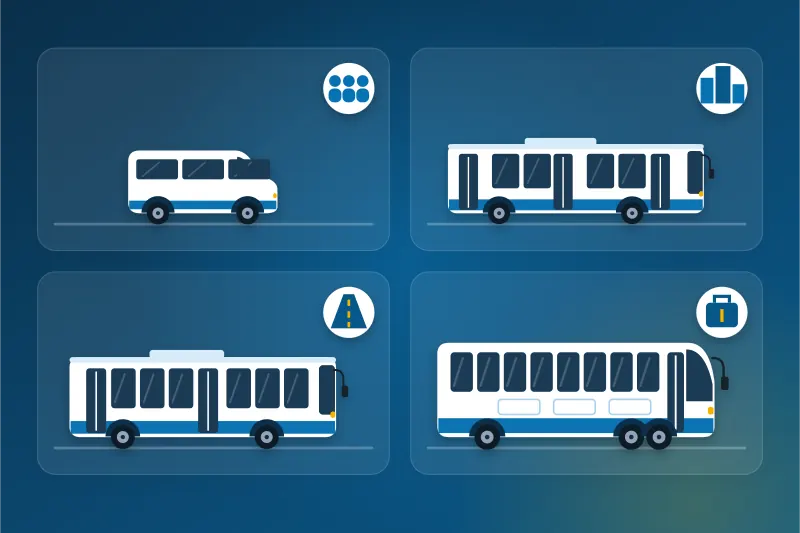 Buying a bus
 7 min read
City bus, intercity bus, coach or minibus: differences in floor, doors, seats, luggage and the Class I, II, III categories, and which type fits your business.
Read the article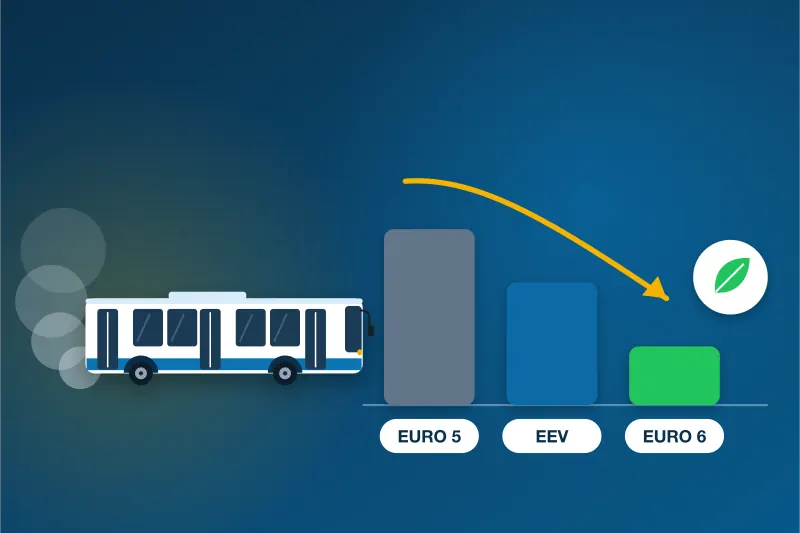 Buying a bus
 6 min read
Euro 5, EEV and Euro 6 buses compared: NOx and particulate limits, key dates, AdBlue, particulate filters and what each class means when you buy a used bus.
Read the articleCall or message us: we tell you what we have in stock and search for what we do not.