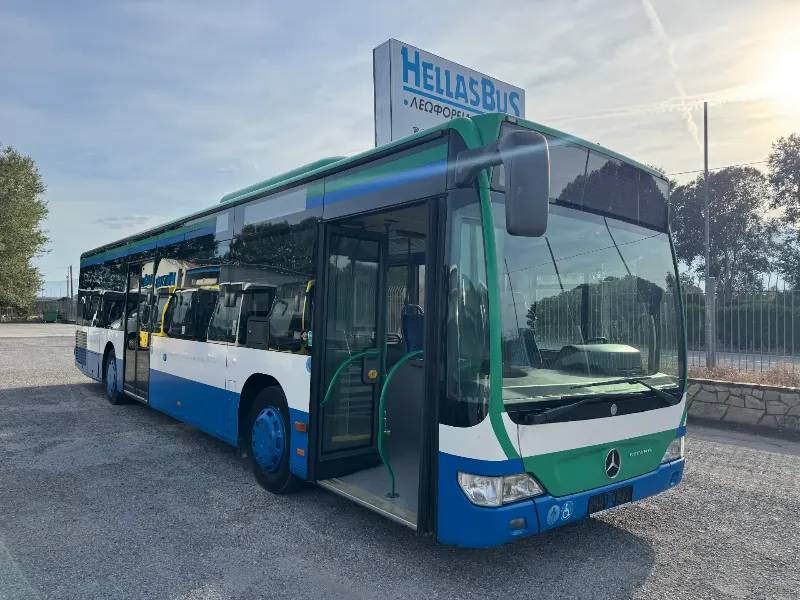
City bus
MERCEDES-BENZ CITARO
- Year of manufacture
- 2010
- Mileage
- 585,095 km
- Gearbox
- AUTOMATIC
- Emission class
- EURO 5
€16,900 + VAT
More...Mon-Fri 08:00-17:00 · Sat 09:00-15:00 23520 61222 6977 400157 6973 228485

Euro 5, EEV and Euro 6 buses compared: NOx and particulate limits, key dates, AdBlue, particulate filters and what each class means when you buy a used bus.
 The HellasBus team 6 min read
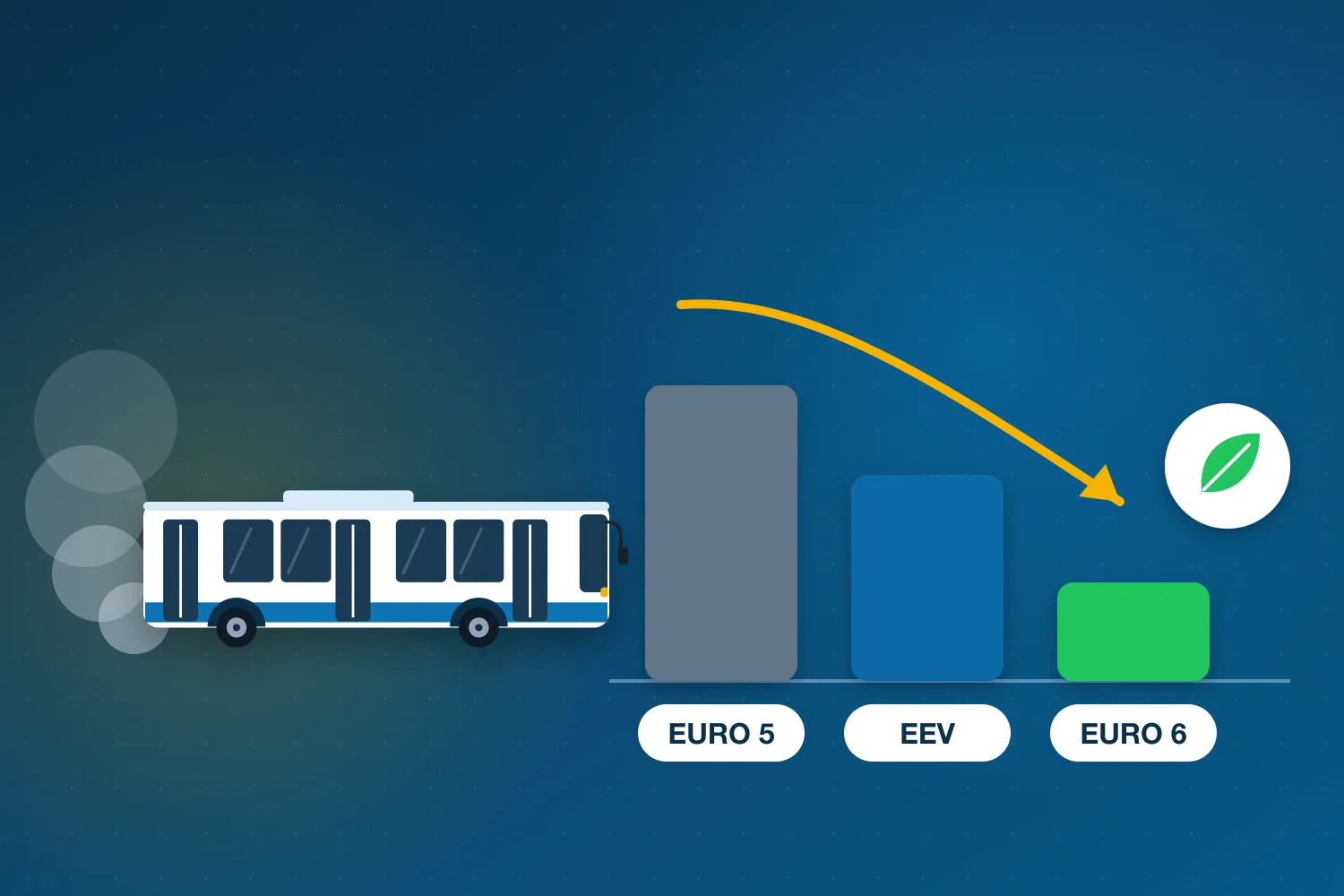
The Euro emission class tells you which emission limits a bus engine met when it was approved. Euro 6 allows 0.4 g/kWh of nitrogen oxides (NOx) against 2.0 g/kWh for Euro 5, and half the particulate limit. EEV sits in between as an optional class with the same NOx and particulate limits as Euro 5.
If you are buying a used bus, the emission class decides three things: where the vehicle can work, what it costs to buy and what maintenance it will need. Below are the figures from the legislation and what they mean in practice.
Euro standards are the EU emission limits for heavy-duty engines, such as those in buses and trucks. Each new stage lowers the permitted nitrogen oxides, particulates, carbon monoxide and hydrocarbons, and it applies first to new engine types and about a year later to all new vehicles.
For heavy-duty vehicles the stages are often written in Roman numerals (Euro V, Euro VI) to set them apart from cars. You will see both forms in listings. The limits are measured in grams per kilowatt-hour of engine work (g/kWh), not per kilometre.
The big difference is NOx: 2.0 g/kWh for Euro 5 and EEV, 0.4 g/kWh for Euro 6 in the steady-state test. Euro 6 also added a limit on particle number, which in practice requires a particulate filter.
| Class | New types from | NOx (g/kWh) | Particulates PM (g/kWh) | Particle number | Smoke opacity (m⁻¹) |
|---|---|---|---|---|---|
| Euro III | Oct. 2000 | 5.0 | 0.10 | No limit | 0.8 |
| Euro IV | Oct. 2005 | 3.5 | 0.02 | No limit | 0.5 |
| Euro V | Oct. 2008 | 2.0 | 0.02 | No limit | 0.5 |
| EEV | Optional | 2.0 | 0.02 | No limit | 0.15 |
| Euro VI | Jan. 2013 | 0.40 | 0.01 | 8.0 × 10¹¹ per kWh | No limit |
The table shows steady-state test limits (ESC for Euro III to V, WHSC for Euro VI), as compiled by DieselNet from Directive 2005/55/EC and Regulation (EC) 595/2009. EEV also has lower limits for hydrocarbons (0.25 against 0.46 g/kWh) and carbon monoxide (1.5 g/kWh).
EEV stands for Enhanced Environmentally friendly Vehicle. It was an optional class, stricter than Euro 5 mainly on smoke and hydrocarbons, and you will often find it on city buses from the last few years before Euro 6.
For a buyer today, an EEV bus and a Euro 5 bus of the same year are practically equivalent in fuel use and maintenance. Look at the condition of the vehicle more than at the three-letter difference.
Euro VI has applied to new heavy-duty engine types since 31 December 2012 and to all new heavy-duty vehicles registered from 31 December 2013, under Regulation (EC) 595/2009. Manufacturers offered it earlier too. Mercedes-Benz, for example, fitted Euro VI engines to the Citaro in 2012.
So a 2013 bus may be Euro 5, EEV or Euro 6. Don’t rely on the year. Check the registration certificate, the certificate of conformity or the engine plate.
You will find the emission class in the registration certificate, in field V.9 (environmental category) of the harmonised EU format, and in the vehicle’s certificate of conformity (COC). If both are missing or they disagree, the manufacturer can confirm the details from the chassis number.
The engine plate and engine code help as well. A Citaro with an OM 936 or OM 470 engine, for example, is Euro 6, because these engines arrived in the Citaro together with Euro VI in 2012. Listings often state the class wrongly or leave it out. Ask for a photo of the relevant document before you book a viewing.
Buses meet the limits with three main technologies: SCR with AdBlue for NOx, exhaust gas recirculation (EGR) for NOx and a diesel particulate filter (DPF) for soot. Euro 4 and Euro 5 engines usually used SCR or EGR, while almost all Euro 6 diesel engines combine SCR, a particulate filter and often EGR.
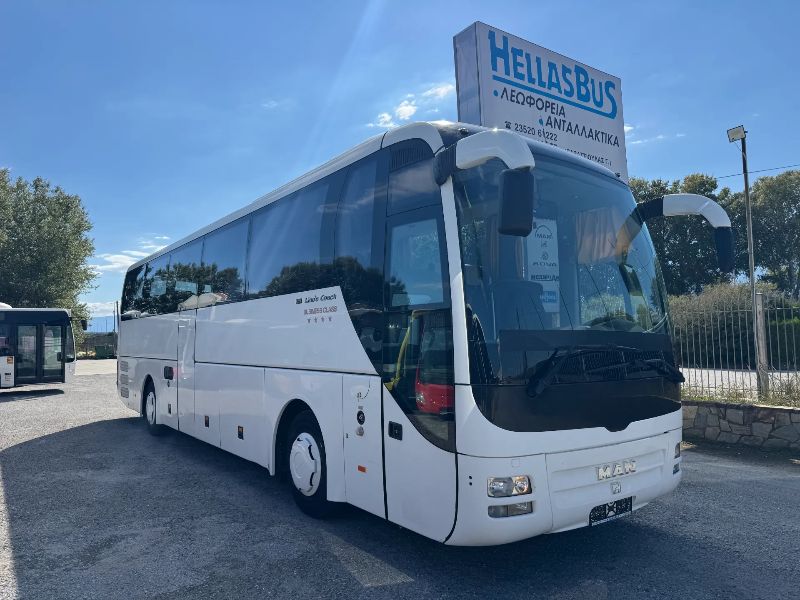
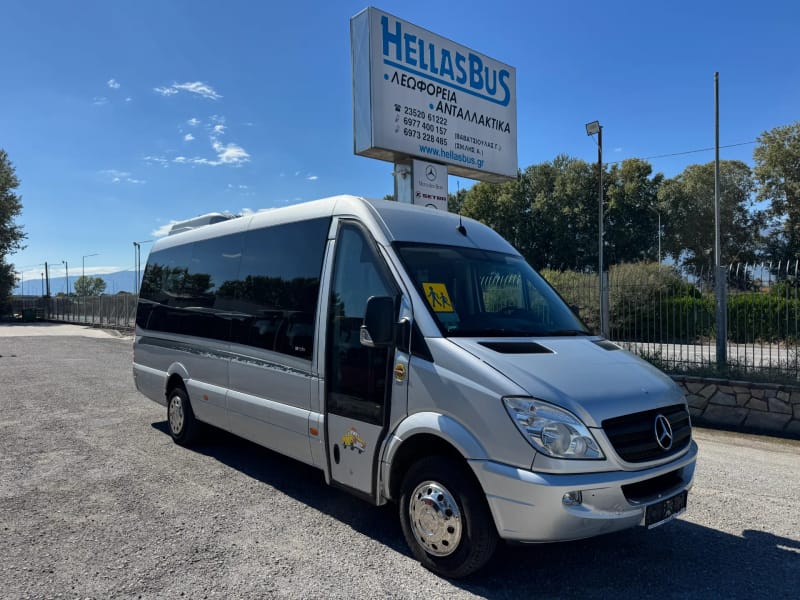
Buses we own, parked at our premises in Litochoro, Pieria, ready to be inspected.
City bus
€16,900 + VAT
More...Intercity / tourist coach
€51,900 + VAT
More...Intercity / tourist coach
€29,900 + VAT
More...A Euro 6 bus has more parts in the exhaust system, with more sensors, a particulate filter and an AdBlue system, so there are more points that need attention. A Euro 5 or EEV bus is simpler and cheaper to buy, but it faces restrictions on where it can run.
| Topic | Euro 5 / EEV | Euro 6 |
|---|---|---|
| Used purchase price | Lower | Higher |
| AdBlue | Depends on the engine | Almost always |
| Particulate filter | Usually not | Yes, with regeneration |
| Low emission zones in Europe | Restricted in several cities | Usually allowed |
| Tenders and operator contracts | May not be accepted | Meets most Euro requirements |
On a Euro 6 bus, ask for the particulate filter history and check for faults in the AdBlue system. A bus that only ran short city routes may have a filter that never regenerated properly. These points are covered in detail in the pre-purchase inspection checklist, and how to stay ahead of them in our maintenance tips.
Choose Euro 6 if the bus will enter European cities with low emission zones or work under an operator contract that requires it. For excursions, staff transport and intercity routes without such conditions, a Euro 5 or EEV bus in good condition is an economical choice.
For public procurement, Directive (EU) 2019/1161 sets minimum shares of “clean” buses, which count vehicles on alternative fuels such as electric or natural gas. A conventional Euro 6 diesel does not count towards that share. If you are bidding for a public body, ask exactly what it requires.
Euro 7 is set by Regulation (EU) 2024/1257 and applies to new heavy-duty vehicle types from 29 May 2028. It lowers the NOx and particulate limits again and adds measurements under real driving conditions.
If you are buying a used bus today, Euro 7 changes nothing for you right away. The limits apply to new vehicle types, and vehicles already on the road are unaffected.
In the HellasBus catalogue every bus lists its emission class along with year, mileage, gearbox and price. You will mostly find Citaro and MAN Lion’s City city buses as well as intercity buses and coaches.
If you need a specific class for a contract, tell us what it requires and we will tell you what we have or what we can source. For the whole buying process, see the used bus buying guide. Call +30 23520 61222 or send a WhatsApp message to +30 6977 400157.
Regulation (EC) 595/2009 made Euro VI mandatory for new heavy-duty vehicle types from 31 December 2012 and for all new heavy-duty vehicles registered from 31 December 2013. A bus first registered in 2014 is normally Euro 6, but you should confirm it in the documents.
On NOx and particulate limits, EEV is the same as Euro 5. It has stricter limits for hydrocarbons, carbon monoxide and smoke opacity. In practice an EEV bus and a Euro 5 bus from the same period share similar technology and running costs.
It depends on the engine. Many Euro 4, Euro 5 and EEV engines, such as Mercedes-Benz BlueTec units, have an SCR system that needs AdBlue, while others met the limits with exhaust gas recirculation (EGR). Almost every Euro 6 diesel uses AdBlue.
Not with a simple conversion. The emission class is part of the type approval of the engine and the vehicle. If you need Euro 6 for a specific contract, buy a vehicle that left the factory as Euro 6.
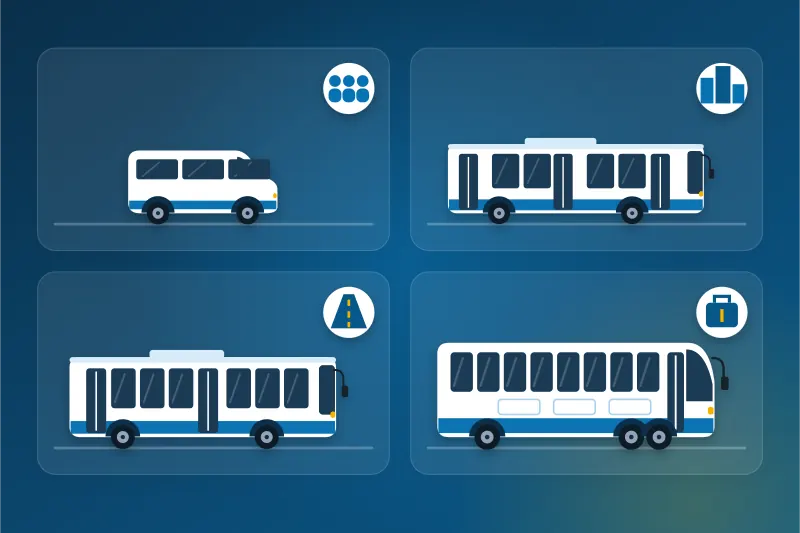 Buying a bus
 7 min read
City bus, intercity bus, coach or minibus: differences in floor, doors, seats, luggage and the Class I, II, III categories, and which type fits your business.
Read the article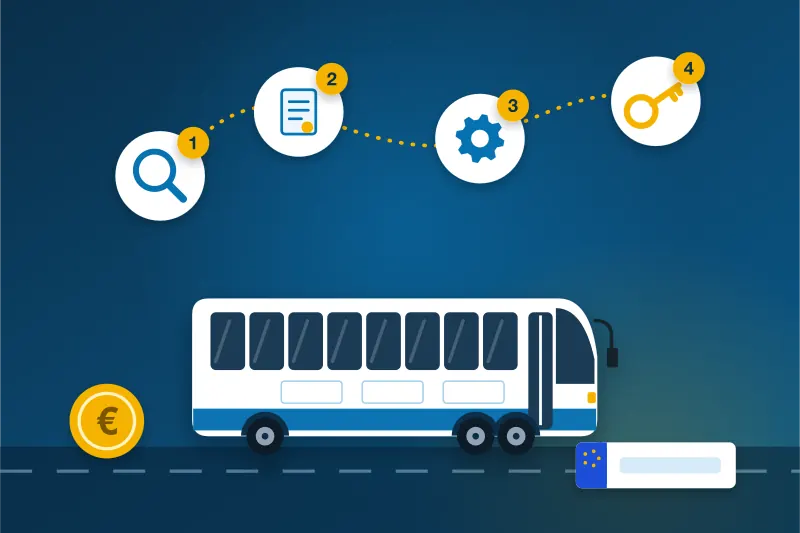 Buying a bus
 7 min read
How to buy a used bus step by step: type, licence, Euro class, inspection, paperwork, KTEO and plates. The practical guide from HellasBus, selling since 2009.
Read the article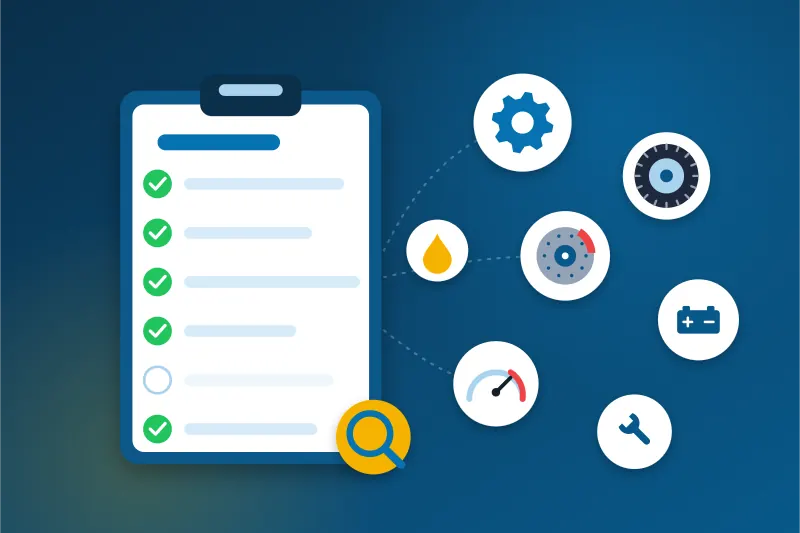 Buying a bus
 7 min read
What to check on a used bus before you buy: papers, mileage, engine, gearbox, brakes, air system and rust. A checklist explaining what each point tells you.
Read the articleCall or message us: we tell you what we have in stock and search for what we do not.