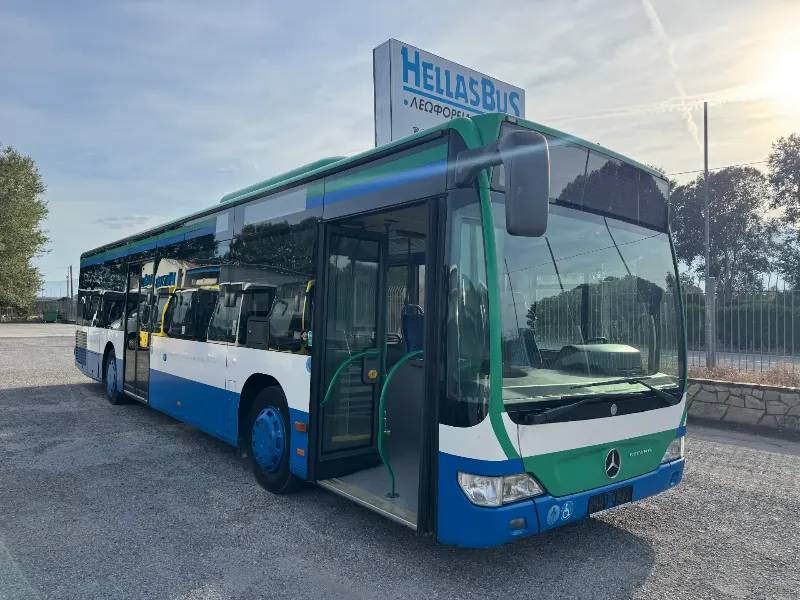
City bus
MERCEDES-BENZ CITARO
- Year of manufacture
- 2010
- Mileage
- 585,095 km
- Gearbox
- AUTOMATIC
- Emission class
- EURO 5
€16,900 + VAT
More...Mon-Fri 08:00-17:00 · Sat 09:00-15:00 23520 61222 6977 400157 6973 228485

10 maintenance tips for a used bus covering oil, air system, brakes, tyres, cooling, AdBlue, gearbox, batteries, doors and rust, with the reason for each one.
 The HellasBus team 7 min read

Maintaining a used bus comes down to ten points: oil and filters on time, the air system, brakes and retarder, tyres, cooling, AdBlue and the particulate filter, the automatic gearbox, batteries, doors and bodywork. Most of them are cheap when done regularly and expensive when forgotten.
The tips below are written for owners and fleet managers who have just bought a used bus, whether a city bus, an intercity bus, a coach or a minibus. For each point you will find what to do, when to do it and why it matters mechanically.
| # | What | When | Why |
|---|---|---|---|
| 1 | Oil and filters | Manufacturer’s schedule | Engine life, particulate filter |
| 2 | Air system | Drain weekly, air dryer per schedule | Water in the valves, ice in winter |
| 3 | Brakes and retarder | Every service, retarder on every descent | Safety, pad wear |
| 4 | Tyres | Pressure weekly, when cold | Fuel use, wear, safety |
| 5 | Cooling | Level daily, radiators before summer | Overheating, head gasket |
| 6 | AdBlue and particulate filter | At every refill | Power derating, expensive sensors |
| 7 | Automatic gearbox | Manufacturer’s schedule | Costly repair if neglected |
| 8 | Batteries and electrics | Monthly | Starting, electronics |
| 9 | Doors, kneeling, ramp | Monthly | Breakdowns on the route, KTEO |
| 10 | Bodywork, rust, air conditioning | After winter and before summer | Frame, passenger comfort |
Change the oil and filters on the manufacturer’s schedule for your specific engine, using oil that carries the manufacturer’s approval. If you don’t know when the used bus was last serviced, give it a full service straight after you buy it.
The approval matters more than the viscosity. Engines with a particulate filter (Euro 6) need low-ash oil, because ash from the oil stays in the filter and does not burn off. Mercedes-Benz publishes its approved specifications in the Specifications for Service Products (BeVo). Keep the invoices, since the next buyer will ask for that history.
Drain the air tanks regularly and replace the air dryer cartridge on the manufacturer’s schedule. The dryer keeps moisture out of the system that operates the brakes, suspension, doors and gearbox.
Water in the air tanks means the dryer is not working. Water rusts the valves and freezes in winter, leaving you with brakes or doors that don’t respond. Oil in the tanks points to a tired compressor. At the end of the day, also listen for leaks with the engine off. A system that loses air makes the compressor work harder.
Check pads and discs at every service and use the retarder on every long descent. The retarder slows the bus without friction, so the brakes stay cool for the moment you need them.
Brakes that overheat on a long descent lose performance. A driver who brakes only with the pedal on a mountain route wears out pads much faster. Give your drivers a simple rule: retarder from the start of the descent, before the speed builds up, and the pedal only for the final stop. Follow the manufacturer’s oil change schedule for the retarder as well, because it runs on oil and heats the coolant.
Check the pressure every week, with cold tyres, at the manufacturer’s values for your load. Check tread, age and wear at every service.
The cooling system needs the right coolant level, antifreeze at the right ratio and clean radiators. On rear-engined buses the radiators collect dust and leaves from the road and lose efficiency.
Clean the radiators before summer with compressed air or low-pressure water, working from the inside out. Check clamps and hoses for cracks. Overheating on a climb with a full bus and the air conditioning at maximum can cost you a head gasket.
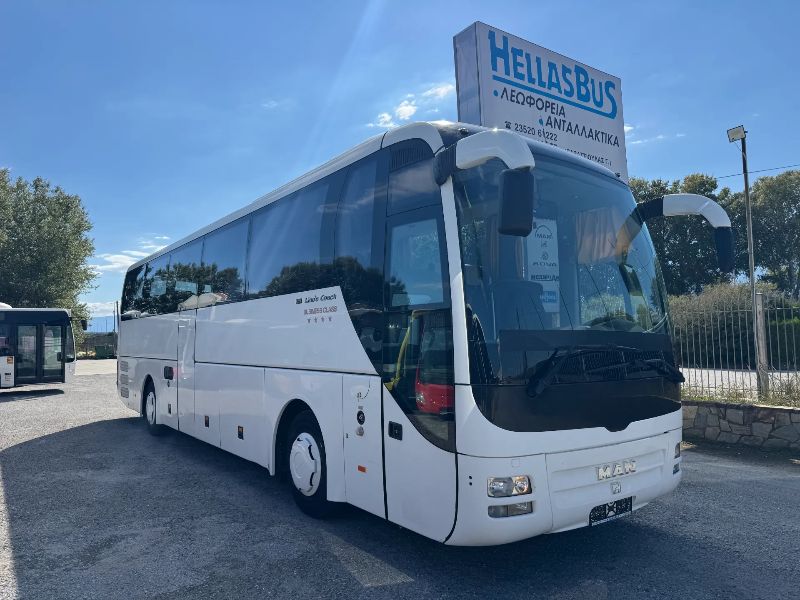
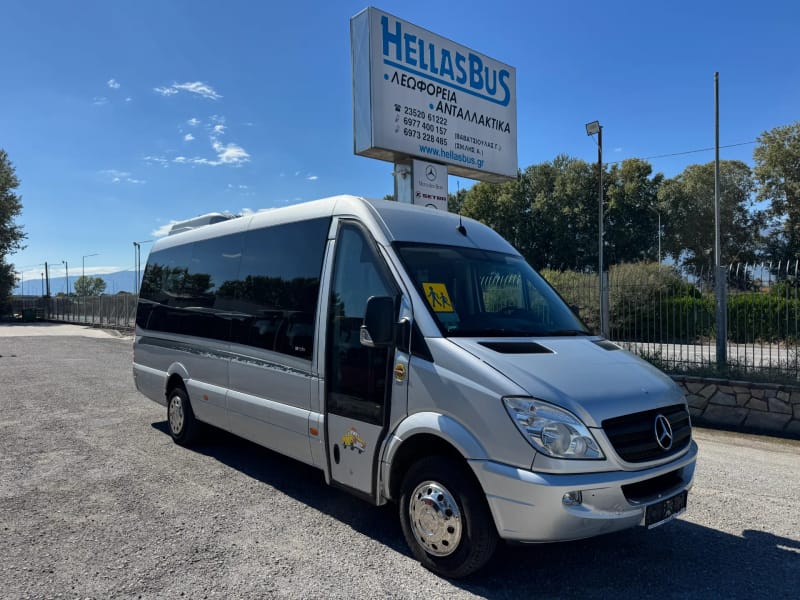
Buses we own, parked at our premises in Litochoro, Pieria, ready to be inspected.
City bus
€16,900 + VAT
More...Intercity / tourist coach
€51,900 + VAT
More...Intercity / tourist coach
€29,900 + VAT
More...Use only AdBlue to ISO 22241 from a clean container, and let the particulate filter complete its regenerations. AdBlue is a 32.5% urea solution, and consumption is usually 2% to 6% of fuel consumption, depending on the system.
Water, dust or fuel residue in the AdBlue damages the pump, the dosing injector and the SCR catalyst. AdBlue freezes at −11 °C and degrades at high temperatures, so store it somewhere cool and out of the sun. When the particulate filter asks for a regeneration, don’t switch the engine off halfway through. Lots of short trips with long idling fill it up faster. For what changes with each emission class, see Euro 5, EEV or Euro 6.
The automatic gearbox needs oil and filters on the schedule of the gearbox maker (ZF, Voith or another) and regular checks for leaks. It is one of the most expensive components on a bus, and changing the oil on time is the cheapest insurance.
City buses, with constant stopping and starting, strain the gearbox more than a coach on the motorway. If shifts become harsh or delayed, take the bus to a specialist workshop before the fault grows.
Keep the terminals clean and tight, check the charging voltage and turn off the battery isolator switch when the bus stands for days. Modern buses have many electronic systems that draw current even with the engine off.
Low voltage causes odd faults in the gearbox, ABS and AdBlue system that look like real failures but are not. A battery that struggles in winter will leave you stuck in the depot on the first cold morning.
Lubricate hinges and guides, adjust the mechanisms and test the safety reversing function on every door. On city buses, also check the kneeling system and the wheelchair ramp, because they are used at every stop.
A door that won’t close takes the bus off the route, and a reversing function that doesn’t work puts passengers at risk. Most door faults start with dirt in the guides or moisture in the air system, which we covered in tip 2.
Wash the underside too, especially after winter, clear the water drains and service the air conditioning before summer. Rust on the frame starts where water and salt sit.
For the air conditioning, change the filters, clean the condenser on the roof and check the refrigerant pressure. An air conditioning failure in July with a full coach costs far more than a service in May. Don’t forget KTEO either, since Directive 2014/45/EU requires an annual roadworthiness test for buses.
Do a full service with all oils and filters, replace the air dryer cartridge and check the tyres, batteries and air conditioning. That way you start from a known baseline and the service book is filled in from day one.
For the points to check before you buy, see the used bus inspection checklist, and for the driver’s work on the road, our tips from bus drivers. In the HellasBus catalogue you will find buses ready for registration. For questions, call +30 23520 61222.
Follow the manufacturer's schedule for your specific vehicle, because intervals depend on the engine, the oil and how the bus is used. A city bus with many stops and long idling usually needs more frequent servicing than a coach that runs on motorways. On top of that, a bus goes through KTEO (the Greek roadworthiness test) every year.
Oil with the approval the manufacturer specifies for your engine. Mercedes-Benz publishes the approved specifications and products in its Specifications for Service Products (BeVo). An oil with the right viscosity but without the approval may not suit an engine with a particulate filter.
Yes, AdBlue freezes at −11 °C. Vehicles with SCR have heating in the tank and lines, so it thaws after the engine starts. Never add water or antifreeze to AdBlue.
Yes. A complete history with invoices helps the mechanic find faults faster and raises the price when you sell the bus, because the next buyer knows what has been done.
 Maintenance and tips
 7 min read
12 tricks experienced bus drivers know: air pressure, retarder, tail swing in turns, vehicle height, tachograph, AdBlue in winter, and the reason behind each.
Read the article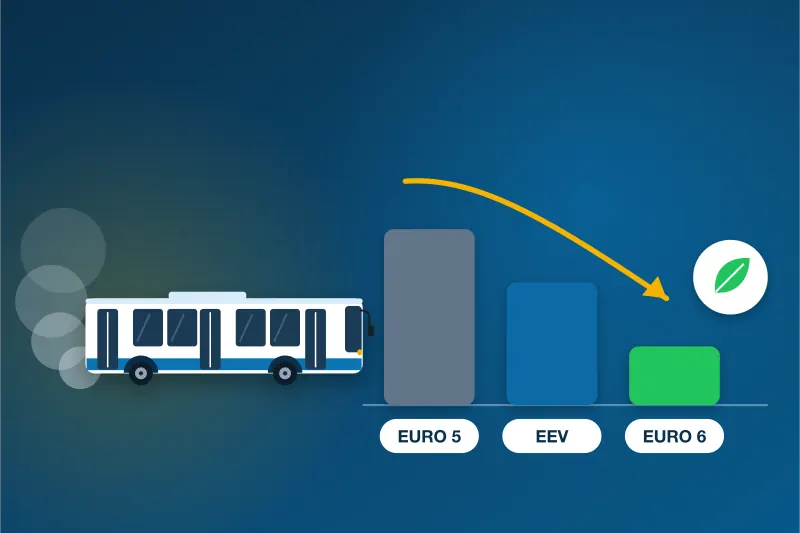 Buying a bus
 6 min read
Euro 5, EEV and Euro 6 buses compared: NOx and particulate limits, key dates, AdBlue, particulate filters and what each class means when you buy a used bus.
Read the article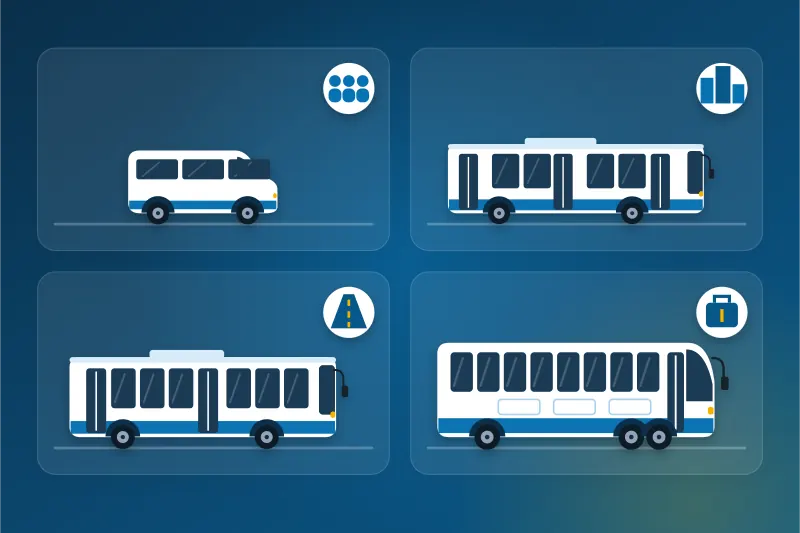 Buying a bus
 7 min read
City bus, intercity bus, coach or minibus: differences in floor, doors, seats, luggage and the Class I, II, III categories, and which type fits your business.
Read the articleCall or message us: we tell you what we have in stock and search for what we do not.