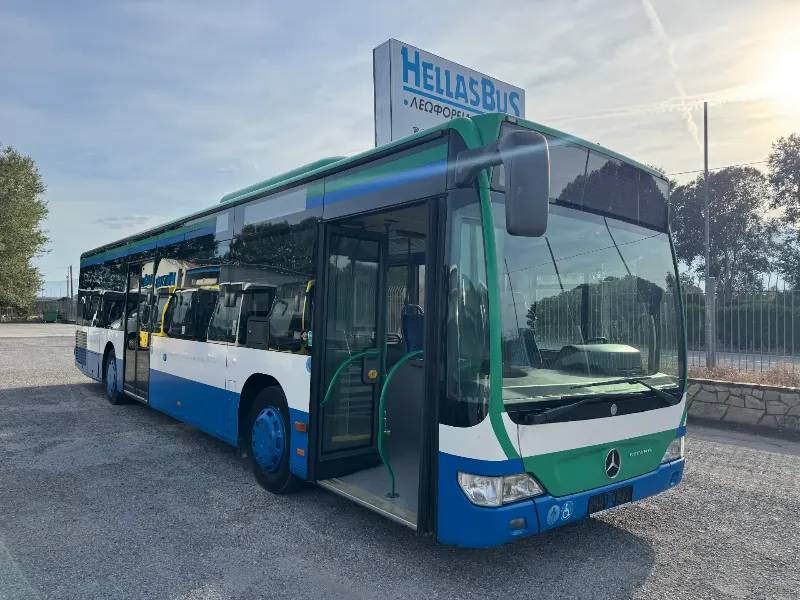
City bus
MERCEDES-BENZ CITARO
- Year of manufacture
- 2010
- Mileage
- 585,095 km
- Gearbox
- AUTOMATIC
- Emission class
- EURO 5
€16,900 + VAT
More...Mon-Fri 08:00-17:00 · Sat 09:00-15:00 23520 61222 6977 400157 6973 228485

How to buy a used bus step by step: type, licence, Euro class, inspection, paperwork, KTEO and plates. The practical guide from HellasBus, selling since 2009.
 The HellasBus team 7 min read
To buy a used bus well, start from the work it will do, not from the advert. First decide on type, seats and emission class, then check the paperwork and the mechanics, and only at the end agree a price, along with who handles customs clearance, KTEO (the Greek roadworthiness test) and plates.
At HellasBus we have been selling used buses since 2009, from Litochoro in Pieria to customers in Greece and abroad. This guide follows the order that works in practice and points out where we see buyers lose money or time.
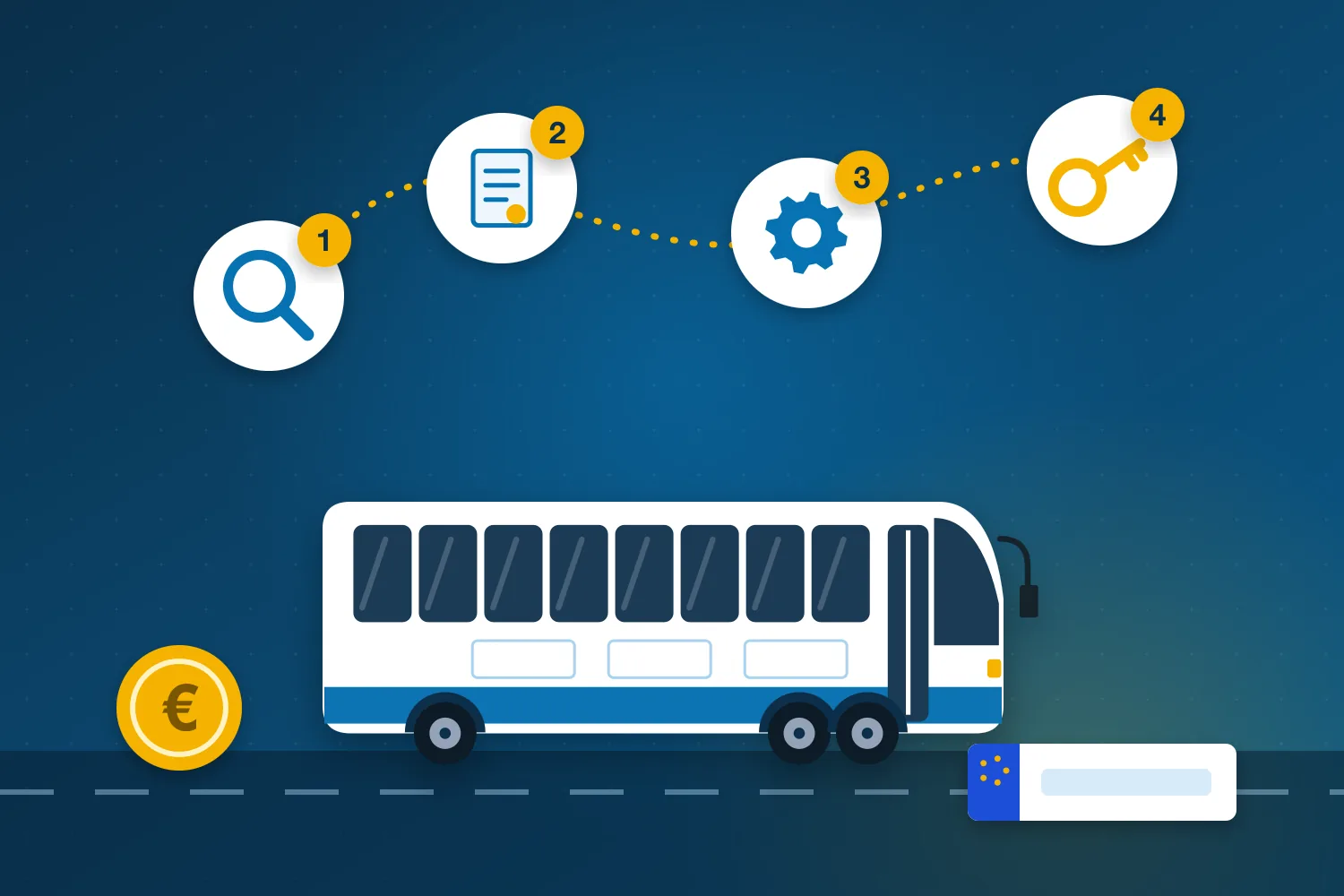
Buying a used bus takes nine steps: need, licence, budget, emission class, choice of vehicle, inspection, test drive, agreement and paperwork. Skip one and you usually pay for it later, in repairs or in weeks spent waiting for registration.
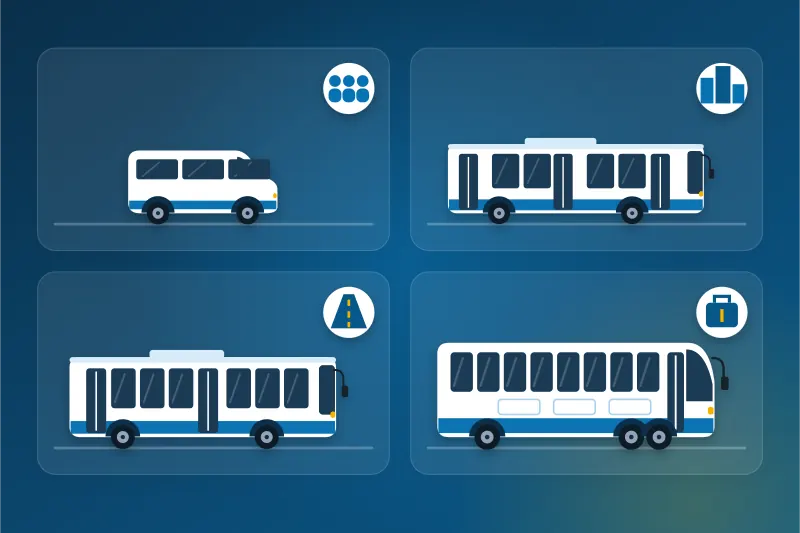
The type follows from the route and the number of passengers. A city route needs a low floor and plenty of standing room, excursions need a coach with luggage space and comfortable seats, and for 10 to 20 people a minibus does the job at a lower cost.
| Job | Type | Example models |
|---|---|---|
| City routes, municipal transport | Low-floor city bus | Mercedes-Benz Citaro, MAN Lion’s City |
| Regional bus operators (KTEL), intercity, school, staff transport | Intercity bus | Mercedes-Benz Integro, Intouro |
| Excursions, tourism, long distance | Touring coach | Mercedes-Benz Tourismo, MAN Lion’s Coach |
| Hotels, small groups, low-demand routes | Minibus | Mercedes-Benz Sprinter 516, 519 |
We have a separate article for each model: Citaro, Tourismo, Integro and Intouro, MAN buses and Sprinter. Don’t buy a bigger vehicle “just in case”. A 14-metre three-axle coach burns more fuel, costs more in tyres and doesn’t fit everywhere.
For a bus with more than 16 passenger seats you need a category D licence. D1 covers vehicles with up to 16 passenger seats and a maximum length of 8 metres, under Directive 2006/126/EC.
The difference matters mostly with minibuses. A Sprinter with 19 passenger seats needs a driver with a D licence, while one with 16 seats can be driven by a D1 holder. For carrying passengers professionally, the driver also needs the Certificate of Professional Competence (CPC, in Greece ΠΕΙ), required by Directive 2003/59/EC. Check your drivers’ licences before you settle on the number of seats.
On top of the vehicle price, allow for VAT, paperwork, insurance and an amount for the first service. Used bus prices are usually quoted excluding VAT, as they are in our own catalogue.
Most buyers forget three costs: tyres (a full set for a three-axle coach is a large sum), batteries and air conditioning. Ask when each was last replaced and write the answer down. If the price includes the paperwork package, ask to see exactly what it covers. On our buses that include it, the package covers customs clearance, registration fees, KTEO, the special inspection lane, ABS and year-of-manufacture certificates and a complete registration file.
For financing (leasing) we work with a bank and can put you in touch with one of its partners. We also take your bus in part exchange, case by case.
If the bus will enter cities with restrictions or run on public-sector tenders, go for Euro 6. For excursions and intercity routes, a well-maintained Euro 5 or EEV costs less to buy and remains a practical choice.
Euro VI has applied to all new heavy vehicles in the EU since 31 December 2013, under Regulation (EC) No 595/2009. So a bus first registered in 2014 or later is as a rule Euro 6, but always confirm it on the registration certificate or the certificate of conformity. We explain the differences, AdBlue and the particulate filter in detail in our article Euro 5, EEV or Euro 6.
The inspection has two parts, paperwork and mechanics. In the paperwork you confirm that the chassis number, year, seats and emission class match the registration certificate, and on the mechanical side you check the engine, gearbox, brakes, air suspension, rust and electronics.
The points we look at when we view a bus, and what each one tells you, are in our used bus inspection checklist. Two rules always apply. See the vehicle up close and with a cold engine. And ask for whatever maintenance records exist, such as invoices, the service book and the KTEO history.
All HellasBus buses are owned by us and stand at our premises in Litochoro. You can view them, open the hatches and take a test drive before you decide.
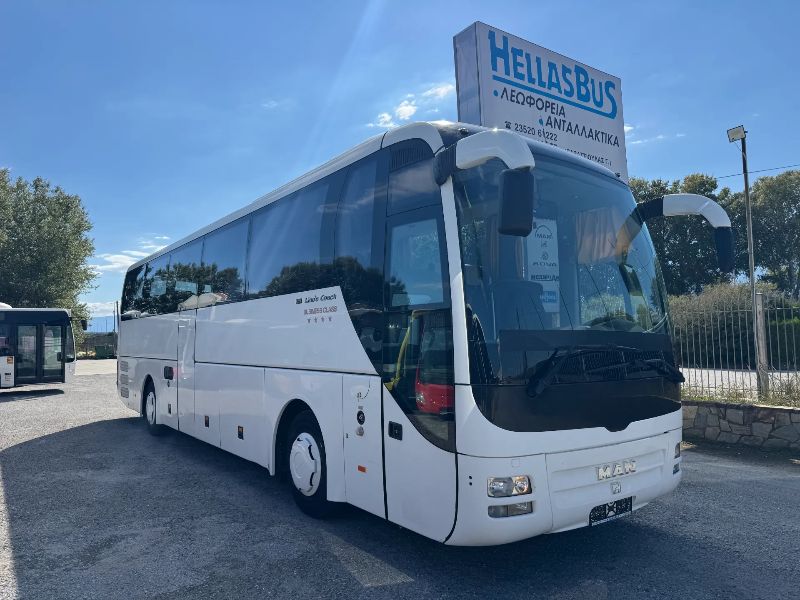
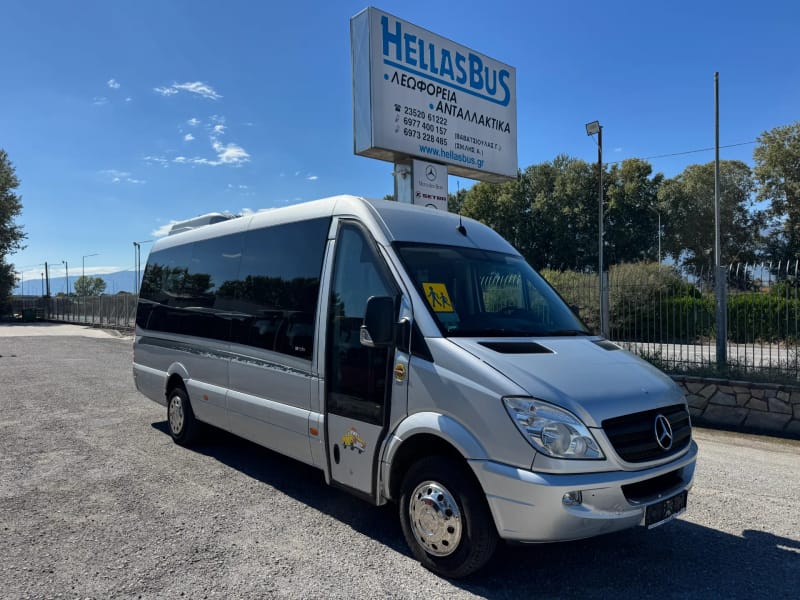
Buses we own, parked at our premises in Litochoro, Pieria, ready to be inspected.
City bus
€16,900 + VAT
More...Intercity / tourist coach
€51,900 + VAT
More...Intercity / tourist coach
€29,900 + VAT
More...On the test drive you check how the engine starts from cold, how the gearbox shifts and how the vehicle brakes, loaded or empty. Ask for at least 20 minutes of driving with uphill and downhill stretches, so the retarder gets used too.
Before the drive, check the oil and coolant levels. If you find oil in the coolant or foam under the oil filler cap, stop there.
The agreement identifies the vehicle by chassis number and states the price with or without VAT, exactly what it includes, the deposit and the delivery date. Anything agreed verbally, such as tyres, a service or a repair, must be written in.
Also check who is responsible for getting the plates issued and what happens if KTEO asks for corrections. At HellasBus delivery is turnkey: we prepare the paperwork and the bus leaves ready for plates.
For a bus from abroad to run in Greece, it needs customs clearance, a technical inspection at KTEO, the certificates required for registration and a file for issuing plates. The process has many steps and involves different authorities, which is why it drags on when buyers do it alone.
After registration the bus goes through KTEO every year. For buses, Directive 2014/45/EU sets the first test one year after first registration and annually after that. Registration details change from time to time. Before you buy from an advert, ask who will handle the file and how long it will take, or get in touch with us and we’ll tell you what applies to that particular vehicle.
If you are abroad, the purchase works the same way and the bus travels on export plates. HellasBus sells to every country and issues export plates (Zoll) itself.
You can ask for photos and videos of specific areas, such as the engine bay, the underside or the instrument panel with the engine running. We speak Greek, English and German, by phone, on WhatsApp or on Viber. The questions buyers ask most are collected in our frequently asked questions.
In the HellasBus catalogue you will see every available bus with year, mileage, gearbox, emission class and price. They are split into city buses and intercity buses and coaches, and by model, for example used Citaro buses or Tourismo coaches.
If you don’t see what you want, tell us the model, year, seats and budget. We’ll search for it. Call +30 23520 61222 or send a WhatsApp message to +30 6977 400157.
It depends on the type, year, mileage and emission class. A Sprinter minibus and a three-axle touring coach sit at very different price points. Prices in our catalogue are shown clearly, excluding VAT, and for buses listed without a price you can simply call us.
A bus with more than 16 passenger seats requires a category D licence. For a vehicle with up to 16 passenger seats and a maximum length of 8 metres, D1 is enough. Carrying passengers professionally also requires the Certificate of Professional Competence (CPC, in Greece ΠΕΙ).
Yes. HellasBus sells to every country and issues export plates (Zoll) itself, so the bus can travel legally to your country, where it will be registered.
It means we prepare all the paperwork and the bus is handed over ready for plates to be issued. When the price includes the package, it covers customs clearance, registration fees, KTEO, the special inspection lane, ABS and year-of-manufacture certificates and a complete registration file.
 Buying a bus
 7 min read
City bus, intercity bus, coach or minibus: differences in floor, doors, seats, luggage and the Class I, II, III categories, and which type fits your business.
Read the article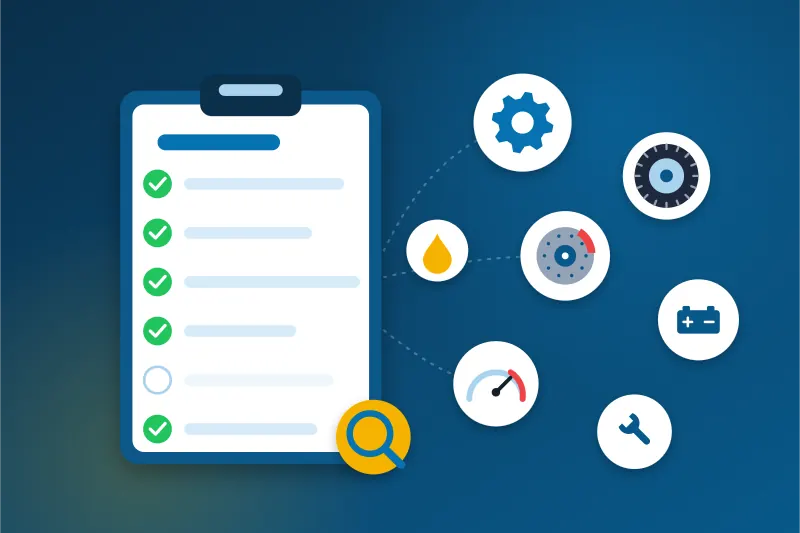 Buying a bus
 7 min read
What to check on a used bus before you buy: papers, mileage, engine, gearbox, brakes, air system and rust. A checklist explaining what each point tells you.
Read the article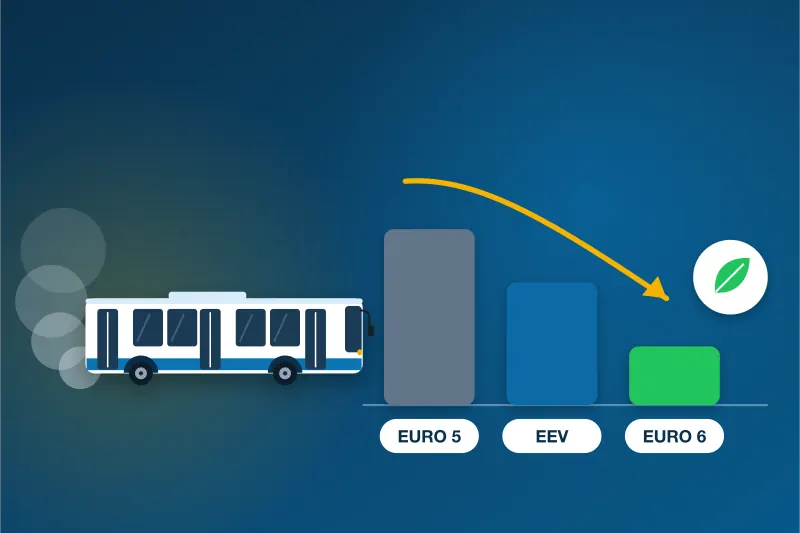 Buying a bus
 6 min read
Euro 5, EEV and Euro 6 buses compared: NOx and particulate limits, key dates, AdBlue, particulate filters and what each class means when you buy a used bus.
Read the articleCall or message us: we tell you what we have in stock and search for what we do not.