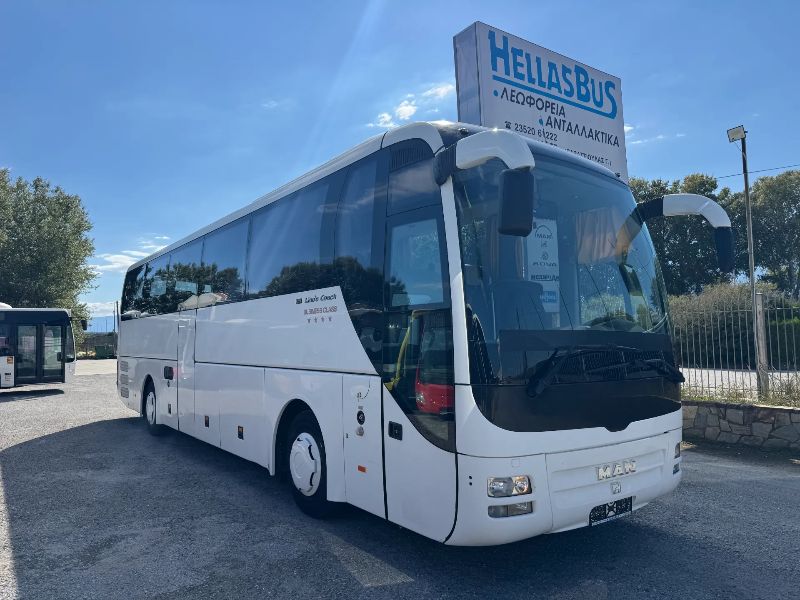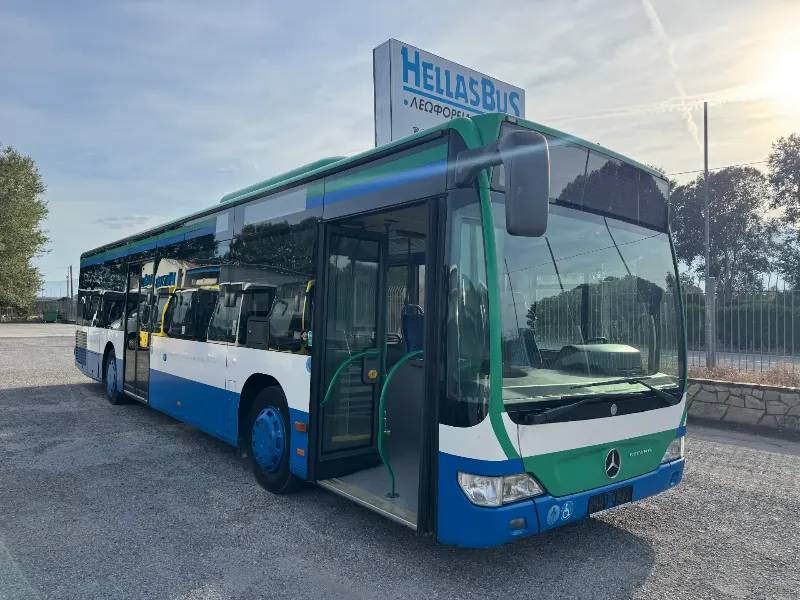
City bus
MERCEDES-BENZ CITARO
- Year of manufacture
- 2010
- Mileage
- 585,095 km
- Gearbox
- AUTOMATIC
- Emission class
- EURO 5
€16,900 + VAT
More...Mon-Fri 08:00-17:00 · Sat 09:00-15:00 23520 61222 6977 400157 6973 228485

What to check on a used bus before you buy: papers, mileage, engine, gearbox, brakes, air system and rust. A checklist explaining what each point tells you.
 The HellasBus team 7 min read

On a used bus you check the paperwork first and the mechanics second: chassis number match, mileage, service history, engine, gearbox, brakes, air system, suspension, rust and electronics. The checklist below follows the order in which an inspection runs in practice, with a cold engine at the start and a road test at the end.
We at HellasBus have been buying, inspecting and reselling buses since 2009, from Citaro city buses to three-axle coaches. The mistakes that cost the most are rarely hidden. Usually they are things the buyer saw but didn’t look into.
First check that the chassis number (VIN) on the vehicle matches the registration certificate and that the year, seats and emission class agree. Then ask for the service and KTEO (the Greek roadworthiness test) history.
| Document | What to check | What it tells you |
|---|---|---|
| Registration certificate | VIN, year, seated and standing places | Whether the vehicle is the one being described to you |
| Certificate of conformity or technical data | Emission class (Euro), weights, dimensions | Whether it can legally do your job |
| Service book, invoices | Dates, mileage, what was replaced | How it was maintained and what is coming up |
| KTEO history | Remarks, re-tests | Recurring problems |
| Tachograph | Calibration date, odometer data | Mileage and usage |
If the bus is imported, also ask for the documents from the country of origin. Anything missing from the file is something you will have to chase at registration.
You check the mileage by cross-referencing the odometer, service invoices, KTEO records and the digital tachograph. The digital tachograph, required under Regulation (EU) No 165/2014, records the odometer reading, so a single download shows whether the numbers agree.
Wear tells its own story too. A polished steering wheel, a worn driver’s seat and pedals with the rubber gone don’t fit with 200,000 km on a 15-year-old bus. A city bus that worked a route makes many stops and opens its doors thousands of times. That is why, on a city bus, the doors and brakes say more than the figure on the odometer.
Start the engine cold, after it has stood for hours, and watch for smoke, noise and oil pressure. A warm engine hides hard starting, knocking and leaks.
Check the level and colour of the oil and coolant. Milky-looking oil, or oil in the coolant reservoir, is a reason to stop the inspection. Look over the engine bay for oil and fuel residue as well. On the first-generation Citaro, for example, engine-bay fires were recorded and recalls followed, with Daimler linking the risk to oil and fuel residue and to poor maintenance. A clean engine bay is a safety matter. Read more in our article on the Mercedes-Benz Citaro.
The gearbox is checked on the test drive. Shifts should be smooth, without jolts, slipping or delay, both uphill and downhill. On automatic gearboxes also ask when the oil was last changed, because changing it at the right interval keeps the gearbox alive.
The retarder (hydrodynamic brake) is tested on a descent. It should scrub off speed noticeably and steadily without pushing the coolant temperature too high. A retarder that doesn’t work means the brakes have done all the work on descents, so check them more carefully.
On the air system, check how quickly it fills, whether it holds pressure with the engine off and whether the air dryer has been replaced on schedule. On the brakes, look at pad thickness and the discs, and on the air suspension, check that the vehicle levels itself.
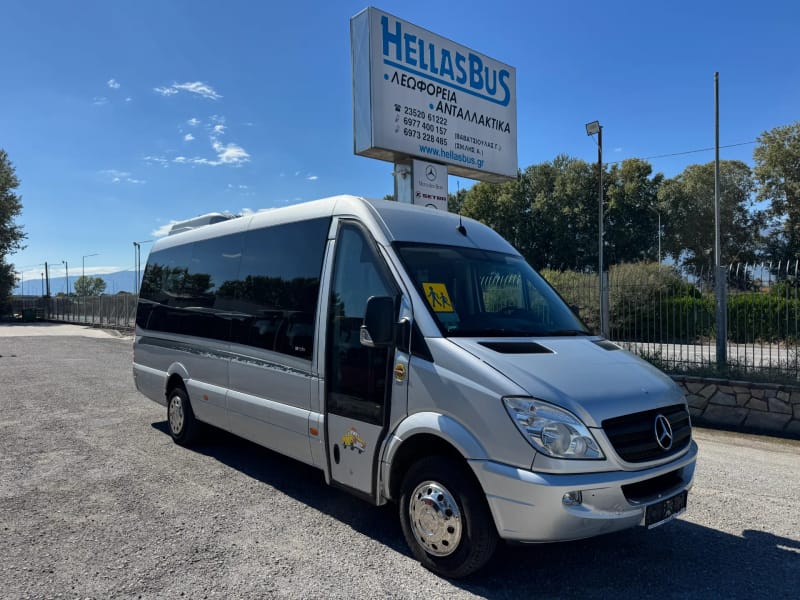
Buses we own, parked at our premises in Litochoro, Pieria, ready to be inspected.
City bus
€16,900 + VAT
More...Intercity / tourist coach
€51,900 + VAT
More...Intercity / tourist coach
€29,900 + VAT
More...Look for rust on the underside of the frame, around the doors, in the wheel arches and at the floor joints. Rust in the load-bearing frame costs far more than rust on an outer panel.
You need a pit or a lift and a torch. Press down on the floor near the doors and under the seats. A soft floor means water has been getting in for years. On city buses, which are washed often and work through winters with salted roads, this is the most important check of all.
Run a diagnostic check for stored fault codes and test every system the passengers use: doors, air conditioning, heating, destination displays, microphone, and the fridge and toilet where fitted. Air conditioning is one of the most expensive systems to repair.
| System | How to check it | What a fault points to |
|---|---|---|
| Diagnostics (engine, gearbox, ABS, EBS) | Read fault codes with a computer | Hidden problems, possibly expensive |
| AdBlue / SCR (Euro 5, EEV, Euro 6) | Warnings, fluid quality, NOx faults | Power limitation, sensors, pump |
| Particulate filter (Euro 6) | Regeneration history, warnings | Blocked filter, cleaning costs |
| Air conditioning | 15 minutes at full power, every vent | Compressor, leak, fans |
| Doors | Opening, closing, reversing function | Mechanisms, air valves |
| Tyres | Tread depth, DOT code (age) | Immediate replacement cost |
AdBlue is a 32.5% urea solution. If it is contaminated or old, the SCR system logs faults and the engine may lose power. What changes from one emission class to the next is explained in Euro 5, EEV or Euro 6.
In the passenger area check the seats, seat belts, floor, windows and lighting, because these are what your customers see from day one. On coaches, open every luggage bay and check the locks, seals and for damp.
Count the seats and compare them with the number on the registration certificate. A bus whose layout was changed without the documents being updated will cause you trouble at KTEO. On coaches, check that the seats recline and lock, that the belts retract properly and that the toilet, if fitted, has tanks with no leaks. A musty smell in the luggage bays or under the seats usually means water coming in through the windows or from the roof-mounted air conditioning.
| Item | What to check | Why it matters |
|---|---|---|
| Seats and belts | Number, mounting, mechanisms | Match with the registration certificate, KTEO, safety |
| Floor | Soft spots, worn flooring | Water and rust underneath |
| Windows and emergency exits | Sealing, emergency hammers, signage | KTEO and passenger safety |
| Luggage bays | Locks, seals, damp | Customers’ luggage, rust |
| Driver’s area | Instruments, seat, mirrors or cameras | Your driver’s daily work |
The test drive needs at least 20 minutes, with town driving, an uphill, a downhill and a stretch at steady speed. Drive it yourself or have your driver do it, and take notes.
Write down every finding with its cost and priority. Anything affecting safety or KTEO is fixed before delivery, and the rest goes into the negotiation. Ask for everything you agree to be written into the purchase agreement.
All HellasBus buses stand at our premises in Litochoro, Pieria, and you can carry out this inspection on site, with your own mechanic if you wish. See the buses available now, read the complete buying guide or call +30 23520 61222 to book a visit.
Allow two to three hours: one for the paperwork and an exterior check with a cold engine, one for the engine bay, underside and interior, and at least 20 minutes on the road.
Compare the odometer with the service invoices, the KTEO records and the data from the digital tachograph, which logs the odometer reading. Look at the wear on the steering wheel, pedals and driver's seat as well. If they don't match, ask for an explanation.
Yes, on any bus with electronic systems. Stored fault codes for the engine, gearbox, ABS and AdBlue system reveal problems that don't show up on a test drive. The check is done with the manufacturer's diagnostic software or compatible workshop equipment.
Yes. All our buses are owned by us and stand at our premises in Litochoro, Pieria, for inspection and demonstration. Call +30 23520 61222 to arrange your visit.
 Buying a bus
 7 min read
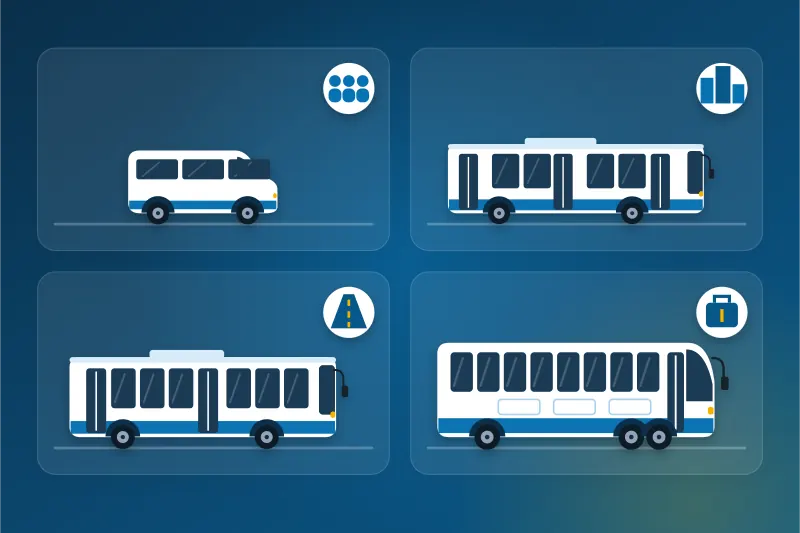
City bus, intercity bus, coach or minibus: differences in floor, doors, seats, luggage and the Class I, II, III categories, and which type fits your business.
Read the article Buying a bus
 7 min read
How to buy a used bus step by step: type, licence, Euro class, inspection, paperwork, KTEO and plates. The practical guide from HellasBus, selling since 2009.
Read the article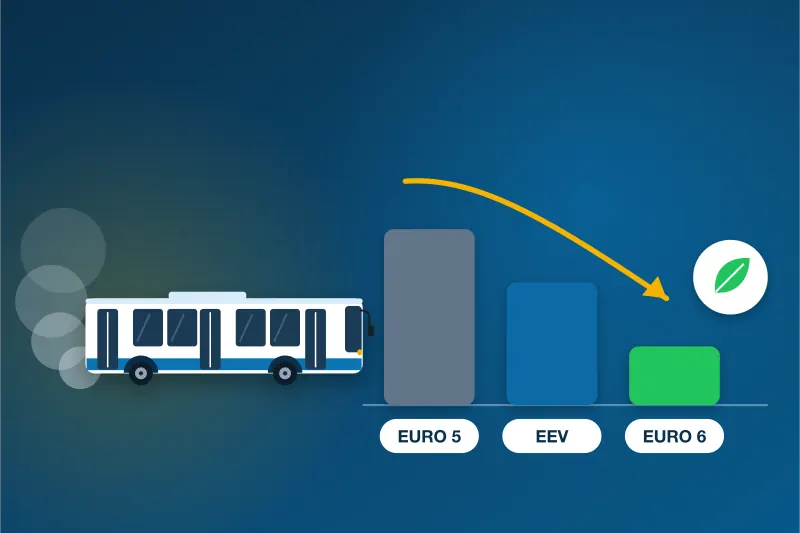 Buying a bus
 6 min read
Euro 5, EEV and Euro 6 buses compared: NOx and particulate limits, key dates, AdBlue, particulate filters and what each class means when you buy a used bus.
Read the articleCall or message us: we tell you what we have in stock and search for what we do not.