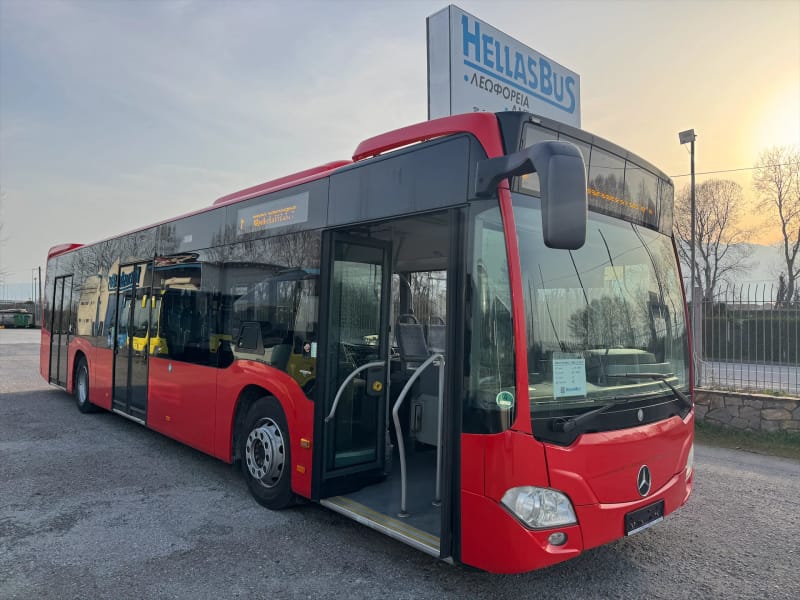
City bus
MERCEDES-BENZ CITARO
- Year of manufacture
- 2010
- Mileage
- 585,095 km
- Gearbox
- AUTOMATIC
- Emission class
- EURO 5
€16,900 + VAT
More...Mon-Fri 08:00-17:00 · Sat 09:00-15:00 23520 61222 6977 400157 6973 228485

Mercedes-Benz Citaro since 1997: O530 and C2 generations, K, G, LE and Ü versions, OM 906, OM 457, OM 936 and OM 470 engines, and what to check on a used Citaro.
 The HellasBus team 7 min read
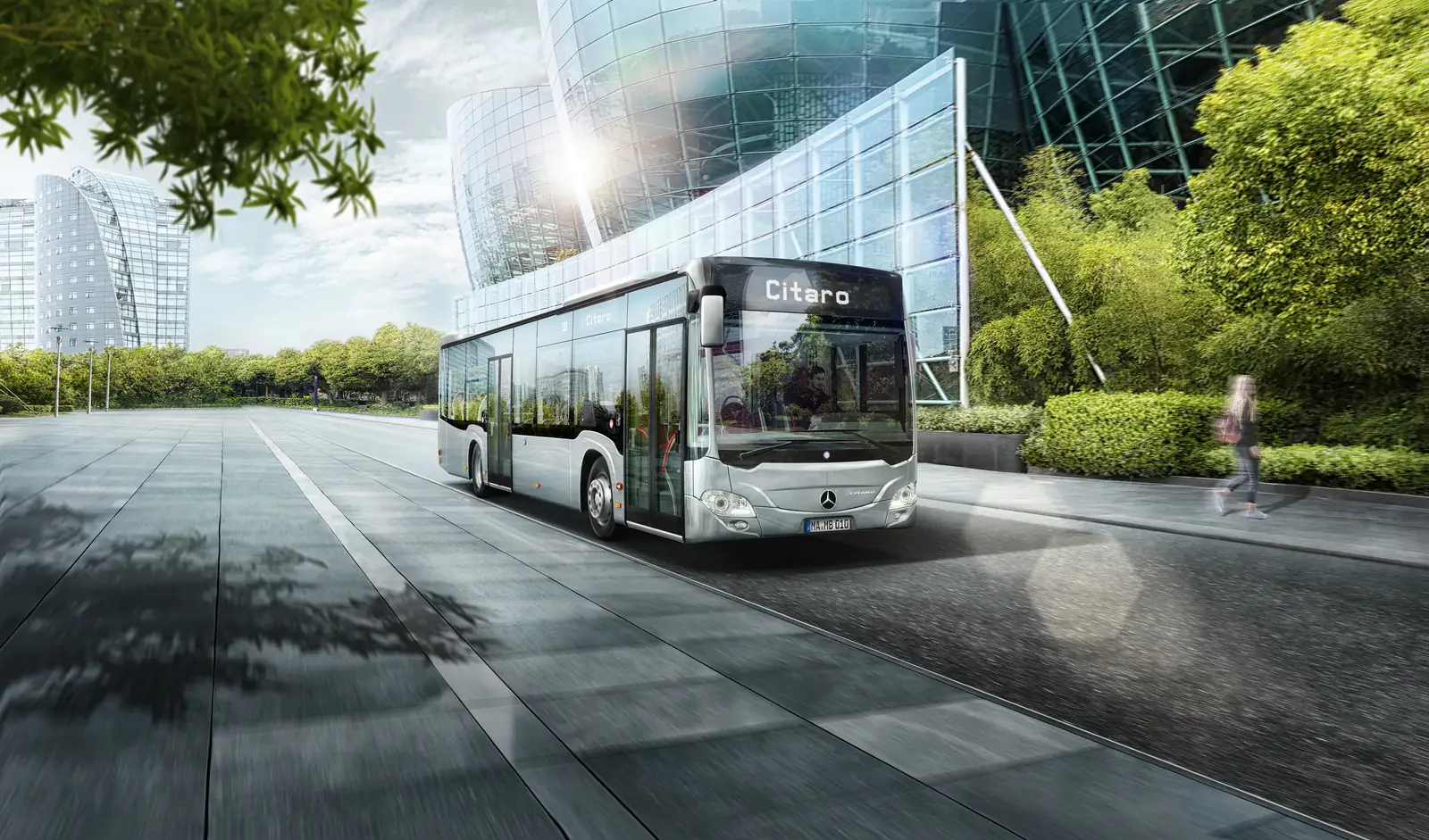

The Mercedes-Benz Citaro is the low-floor city bus from Mercedes-Benz, factory code O 530. It was launched in 1997, the second generation (C2) arrived in 2011, and by November 2024 a total of 70,000 Citaro buses had been built. Daimler Truck says that makes it the most successful bus in the history of Daimler Buses.
At HellasBus the Citaro is one of the models we have in stock most often. Below you will find the generations, the versions and the engines, and what to check when you buy a used Citaro.
The Citaro premiered in 1997 at the UITP congress in Stuttgart as the successor to the O 405 N. The first one went to Hamburger Hochbahn on 27 November 1997, with a rear-mounted Euro II engine, as a 12-metre solo bus and an 18-metre articulated bus.
Over the following years the family grew to include intercity versions, low-entry versions and different lengths. The first generation passed 32,000 vehicles before it was replaced in 2011. The Citaro is built mainly in Mannheim, Germany, and in Ligny-en-Barrois, France.
| Year | What changed |
|---|---|
| 1997 | Premiere in Stuttgart, Citaro 12 m and Citaro G 18 m, Euro II |
| 1998 | Citaro Ü and GÜ intercity versions |
| 2001 | Euro III engines |
| 2004 | Euro IV with SCR technology (AdBlue) |
| 2005 | Citaro LE (low entry) and the four-axle CapaCity, 19.5 m |
| 2006 | Citaro K 10.5 m, facelift outside and inside, Euro V |
| 2011 | Second generation (C2) |
| 2012 | Euro VI engines |
| 2018 | Electric eCitaro |
There are two diesel generations: the first (1997 to 2011, facelifted in 2006) and the second, known as the C2, from 2011. The 2006 facelift changed the front and rear, the interior ceiling and the seats, while the C2 brought a new design and a new driver’s workplace.
On the C2 the driver’s door opens towards the rear and the driver sits higher. The dashboard has a colour display, and there is a multifunction steering wheel. Bi-xenon headlamps and ESP on the solo bus became available as options. In 2014 the articulated bus gained an anti-jackknifing system (ATC), and LED headlamps followed in 2015.
For a buyer, a first-generation bus built after 2006 and a C2 with Euro 5 or EEV are the most affordable choices. A Euro 6 C2 costs more, but it is accepted in more cities and under more contracts. We explain what each class means in Euro 5, EEV or Euro 6.
The Citaro was built in lengths from about 10.5 to 21 metres. The standard solo version is 12,135 mm long and 2,550 mm wide, the Citaro G is an articulated bus of about 18 metres, and the Citaro K is the short 10.5-metre version.
| Version | Type | Length | Best suited to |
|---|---|---|---|
| Citaro K | Short, 2 axles | 10.5 m | Narrow streets, lower-demand routes |
| Citaro | Solo, 2 axles | 12.1 m | The standard city route |
| Citaro LE / LE Ü | Low entry | 12 m | City and suburban routes |
| Citaro L | Solo, 3 axles | 15 m | High-demand routes |
| Citaro G | Articulated | 18 m | Main trunk routes |
| CapaCity | Articulated, 4 axles | 19.5 m | Very high-demand routes |
| CapaCity L (C2) | Articulated, 4 axles | 21 m | Very high-demand routes |
| Citaro Ü / GÜ | Intercity | 12 m / 18 m | Suburban and intercity routes |
Ü is the intercity version, with seating that also suits routes outside the city. The LE has a low floor at the front and a higher floor at the rear, which makes it simpler to fit the engine at the back. If you need a high-floor intercity bus, look at the Integro and Intouro.
The first generation used inline six-cylinder engines, the OM 906 hLA (6.4 litres) and the OM 457 hLA (12 litres). The C2 kept these engines at first, and from 2012 it received the OM 936 (7.7 litres) and the OM 470 (10.7 litres), both Euro VI.
| Engine | Displacement | Power | Generation / emission class |
|---|---|---|---|
| OM 906 hLA | 6.4 l | 170 kW | 1st generation and early C2, up to Euro 5 / EEV |
| OM 457 hLA | 12 l | depends on version | 1st generation and early C2, up to Euro 5 / EEV |
| OM 936 | 7.7 l | 220 or 260 kW (299 or 354 PS) | C2 from 2012, Euro VI |
| OM 470 | 10.7 l | 265 or 290 kW (360 or 394 PS) | C2 from 2012, Euro VI |
The gearboxes are automatic. The most common are the Voith DIWA (4 speeds), the ZF Ecomat (5 speeds until 2001, 6 speeds until 2011) and the ZF EcoLife (6 speeds from 2010). For the Euro 6 engines, Mercedes-Benz reported fuel consumption about 5% lower on average than their predecessors, even though the engines are heavier.
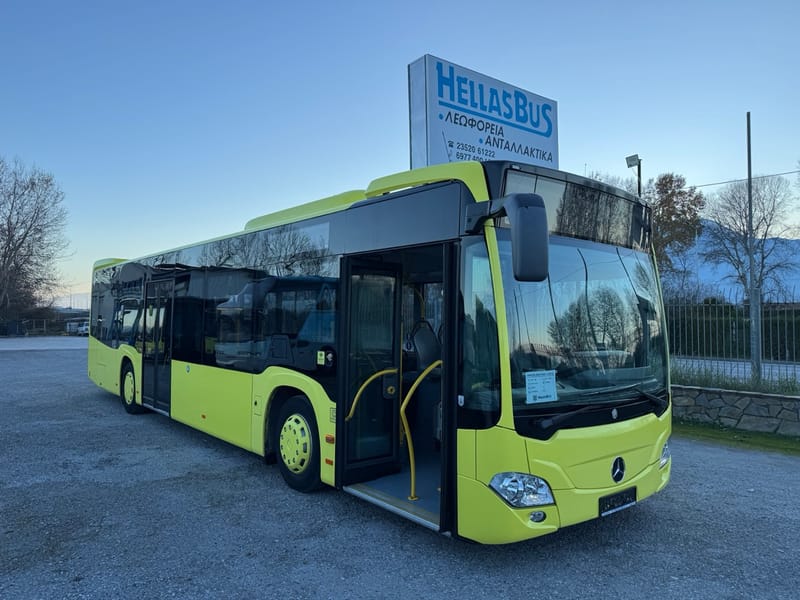
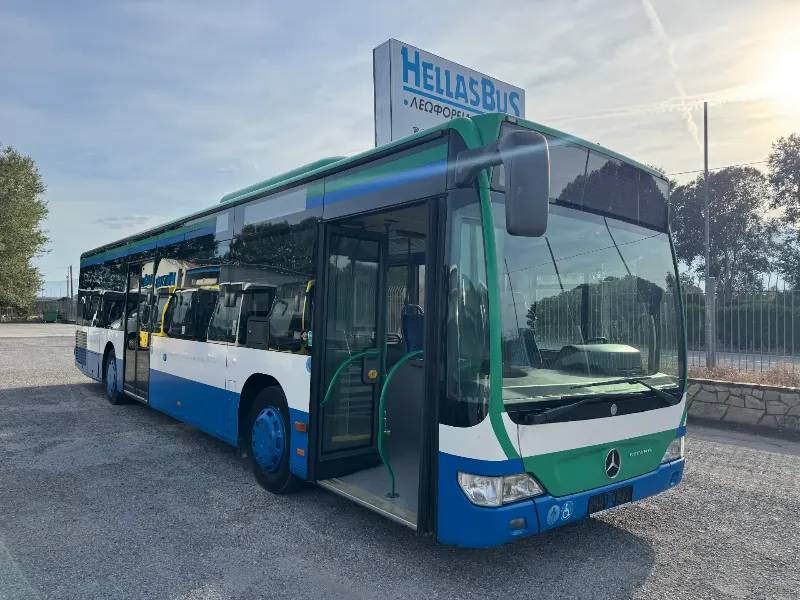
Buses we own, parked at our premises in Litochoro, Pieria, ready to be inspected.
City bus
€16,900 + VAT
More...City bus
Contact us for price
More...City bus
Contact us for price
More...On a used Citaro, start with the engine bay, the automatic gearbox, the doors, the kneeling function and ramp, the roof-mounted air conditioning, and rust around the doors and wheel arches. On a Euro 6 bus, add the particulate filter and the AdBlue system.
For the details of what to look at and what each finding means, see our pre-purchase inspection checklist.
The Citaro suits city and suburban routes, municipal transport and any service with many stops and standing passengers. It is the wrong choice for excursions and long distances, because it lacks a luggage hold and coach seating.
The Citaro K fits the narrow streets of historic town centres and islands. The G and the CapaCity need roads and depots that can take 18 to 21 metres. For excursions, see the Mercedes-Benz Tourismo, and for a comparison with the other big city bus on the market, read the history of MAN buses.
The eCitaro is the electric version of the Citaro. It was presented in September 2018 at the IAA Commercial Vehicles show in Hanover, and the first 20 were delivered to Hamburger Hochbahn in November of the same year.
Used eCitaro buses are still rare. If you are interested in one, you need to ask different questions: what condition the batteries are in, which chargers your depot needs, and how much range you get on your own route with the air conditioning and heating running. For most diesel Citaro buses, the checks are the ones described above.
All the Citaro buses we have available are on the used Mercedes-Benz Citaro page, with year, mileage, gearbox, emission class and price. We own every vehicle, and they are at our yard in Litochoro, Pieria, where you can see them and take a test drive.
If you want a specific version, for example a Citaro K or a C2 Euro 6, tell us and we will look for it. Call +30 23520 61222 or send a WhatsApp message to +30 6977 400157.
The Citaro was unveiled in 1997 at the UITP congress in Stuttgart, and the first one was delivered to Hamburger Hochbahn on 27 November 1997. The second generation (C2) followed in 2011 and the electric eCitaro in 2018.
K is the short version at around 10.5 metres, G the articulated version at around 18 metres, and LE the low-entry version, with a low floor at the front and a higher floor at the rear. Ü marks the intercity version.
Euro VI engines became available on the Citaro in 2012, in the second generation (C2), with the OM 936 and OM 470. A Citaro C2 can also be Euro 5 or EEV, so confirm the emission class in the vehicle documents.
According to Daimler Truck, the 70,000th Citaro left the production line in November 2024, an electric eCitaro for The Hague. The first generation alone passed 32,000 vehicles.
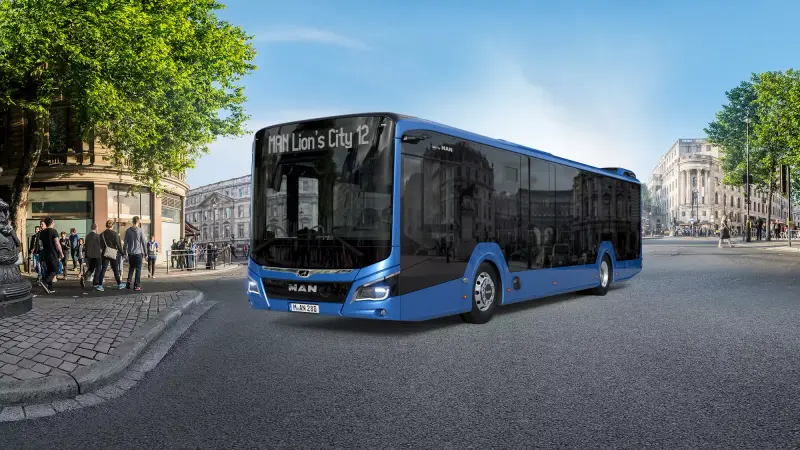 Models
 7 min read
The history of MAN buses from 1915 to the Lion's City and Lion's Coach, and what type codes A21, A37, A66 and NL 263 mean when you read used bus listings.
Read the article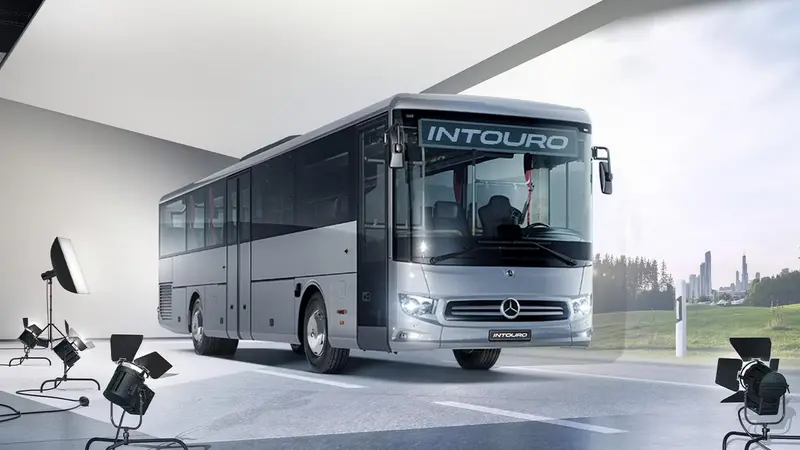 Models
 7 min read
Mercedes-Benz Integro (1996-2018) and Intouro (since 1999): generations, lengths, seats, engines and which intercity bus suits regional and school routes.
Read the article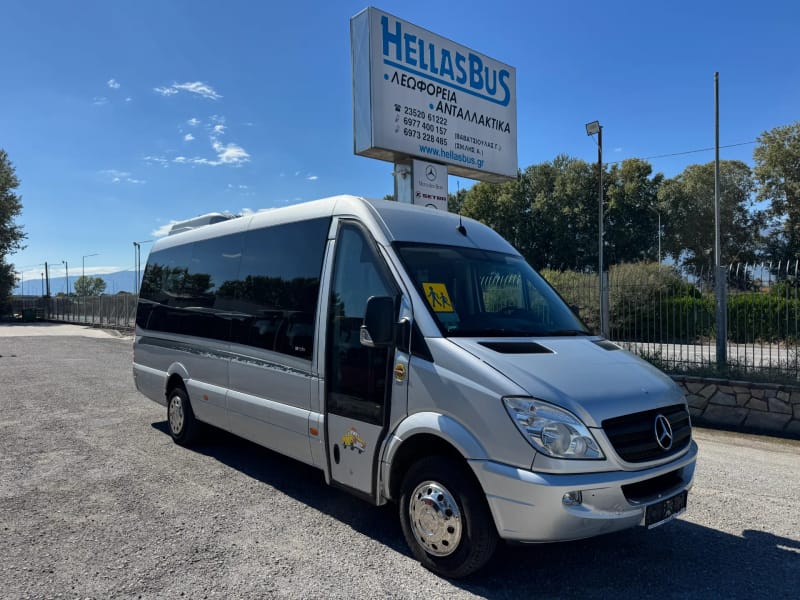 Models
 7 min read
Mercedes-Benz Sprinter as a minibus: generations since 1995, what 516 and 519 mean, engines, seats, D1 or D licence and what to check before you buy a used one.
Read the articleCall or message us: we tell you what we have in stock and search for what we do not.