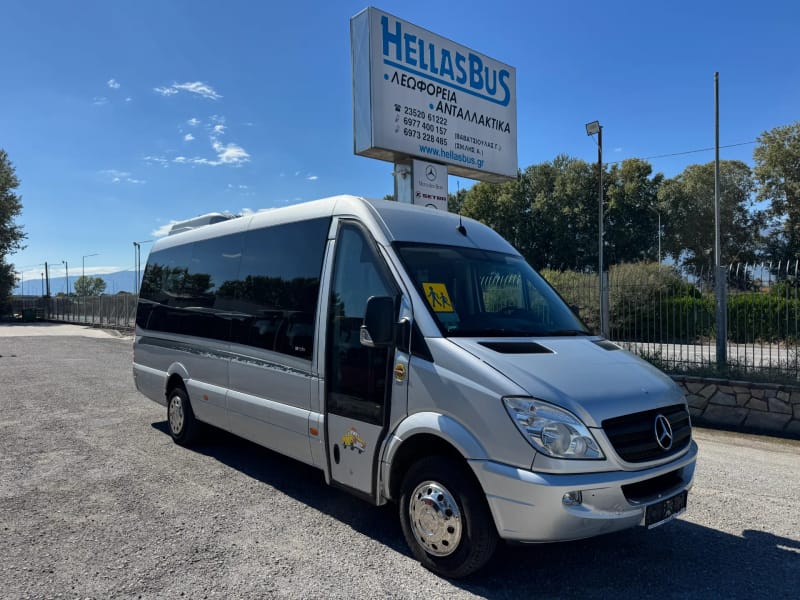
Intercity / tourist coach
MERCEDES-BENZ SPRINTER 516
- Year of manufacture
- 2013
- Mileage
- 346,000 km
- Gearbox
- MANUAL
- Emission class
- EURO 5
€29,900 + VAT
More...Mon-Fri 08:00-17:00 · Sat 09:00-15:00 23520 61222 6977 400157 6973 228485

Mercedes-Benz Sprinter as a minibus: generations since 1995, what 516 and 519 mean, engines, seats, D1 or D licence and what to check before you buy a used one.
 The HellasBus team 7 min read
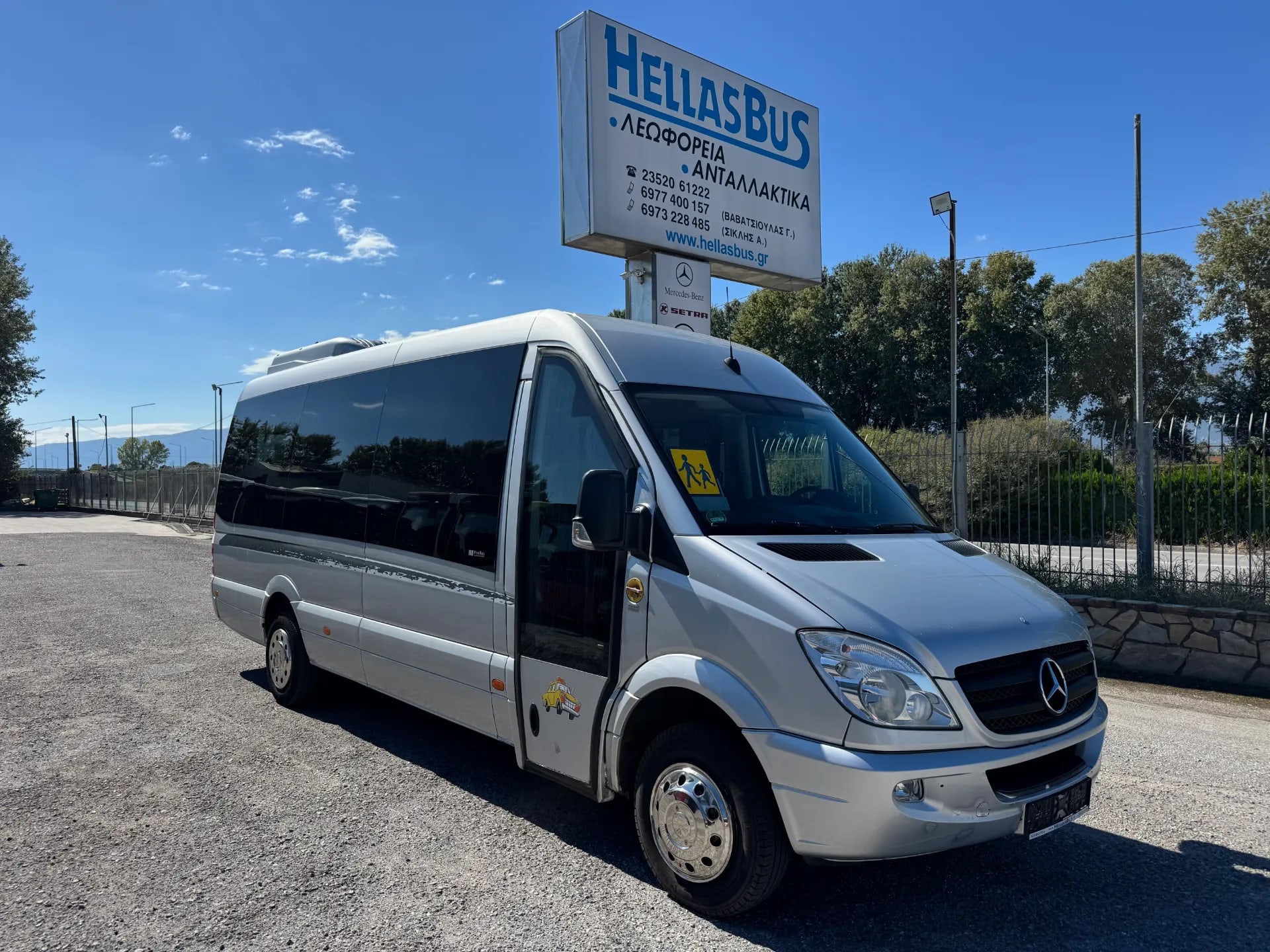

A Mercedes-Benz Sprinter minibus is a Sprinter with a passenger body, usually for 8 to 22 people. The codes 516 and 519 indicate the Sprinter’s heaviest weight class (about 5 tonnes) and, roughly, its power. The 516 has about 160 hp and the 519 about 190.
Hotels, travel agencies, school transport operators and municipalities use Sprinter minibuses for routes with few passengers. Below you will find the generations, what the numbers mean, which versions exist, which licence you need and what to check when you buy a used one.
There are three generations: the first (W903, known as T1N) from 1995, the second (W906, known as NCV3) from 2006 and the third (W907/W910) from 2018. The second generation was facelifted in 2013 with new driver assistance systems and Euro VI engines.
| Generation | Code | From | What to know |
|---|---|---|---|
| 1st | W903 (T1N) | 1995 | Replaced the 1977 T1, facelifts in 2000 and 2002 |
| 2nd | W906 (NCV3) | 2006 | 2013 facelift with Euro VI, the most common generation among used minibuses |
| 3rd | W907 / W910 | 2018 | Unveiled on 6 February 2018 in Duisburg, on sale from June 2018 |
Mercedes-Benz builds the Sprinter mainly in Düsseldorf and Ludwigsfelde in Germany. The minibuses, however, do not leave those plants finished. A specialist unit builds the passenger body, as we describe below.
The numbers follow a rule of thumb. The first digit shows the gross vehicle weight class and the last two show the power, approximately, in tens of horsepower. The 5 is the heaviest class, about 5 tonnes, and from June 2016 up to 5.5 tonnes.
This rule is unofficial, though it fits most models. For the second generation (from 2014) the figures are as follows.
| Version | Engine | Displacement | Output | Torque |
|---|---|---|---|---|
| 516 | OM651, four-cylinder, twin-turbo | 2,143 cc | 163 PS (120 kW) | 360 Nm |
| 519 | OM642, V6 | 2,987 cc | 190 PS (140 kW) | 440 Nm |
For a fully loaded minibus on mountain routes, the 519’s V6 gives you more comfort in reserve. For city work and airport transfers, the 516 does the job with a simpler engine. In the third generation the numbers remain, but the engines have changed over the years, so check the engine code in the documents of the specific vehicle.
Mercedes-Benz sells the Sprinter minibus in four main families: Transfer for shuttle work, Travel as a small coach, City as a city bus and Mobility for passengers with reduced mobility. These bodies are built in Dortmund by Mercedes-Benz Minibus GmbH, founded in 2004.
| Version | Seats | Typical job |
|---|---|---|
| Sprinter Transfer | 13 to 22 | Hotels, airports, routes to villages |
| Sprinter Travel | 17 to 19 | Short excursions, VIP transport |
| Sprinter City | City layout with standing room | Low-demand urban routes |
| Sprinter Mobility | 8 to 18 | Wheelchair transport |
Daimler Buses later sold the Dortmund plant to the Aequita group, and production of Mercedes-Benz-badged minibuses continues there. Sprinters with bodies from other manufacturers are also on the road. For these, pay particular attention to the body approval and the seat count in the registration document.
Buses we own, parked at our premises in Litochoro, Pieria, ready to be inspected.
Intercity / tourist coach
€29,900 + VAT
More...See all used Mercedes-Benz Sprinter Intercity & tourist coaches
For a Sprinter with up to 16 passenger seats and a length of up to 8 metres, a category D1 driving licence is enough. With more than 16 passenger seats you need a category D driving licence, under Directive 2006/126/EC.
Count only the passenger seats and leave out the driver’s seat. A “16+1” means 16 passengers plus the driver, so it stays within D1 limits as long as the length is up to 8 metres. This affects which vehicle you should buy. If your drivers hold D1, a 19+1 Sprinter is of no use to them, however good the price. For commercial passenger transport the driver also needs a Certificate of Professional Competence (CPC, in Greece ΠΕΙ). If the vehicle has more than nine seats including the driver, the driving time and tachograph rules of Regulation (EC) 561/2006 also apply. There is more on the first steps in our guide to buying a used bus.
On a used Sprinter, check the body and chassis for rust, the passenger door, the air conditioning in the passenger area, seats and belts, and on Euro 6 models the AdBlue system and particulate filter. Confirm that the seat count and gross vehicle weight in the registration document match the vehicle.
You will find the checks that apply to every bus, with what each finding means, in our pre-purchase inspection checklist. For keeping your Sprinter in good condition, see our maintenance tips for used buses.
The choice starts with passengers and luggage. For airport and hotel transfers you need room for suitcases, for excursions you need reclining seats and a separate luggage compartment, and for school runs you want as many seats as your drivers’ licences allow.
The Sprinter comes with a manual or an automatic gearbox. For drivers who make many stops in town, the automatic is less tiring. Also ask whether the specific vehicle has rear air suspension, because it changes passenger comfort in the rear seats.
A Sprinter pays off when you usually carry fewer than 20 passengers and the roads are narrow. It uses less fuel, is easier to park and can be driven by a D1 holder if it has up to 16 seats. A 12-metre bus pays off when it runs full, because the cost per passenger drops.
An excursion business can run both: a Sprinter for small groups and airport transfers, and a Tourismo coach or an intercity bus for the larger ones. If you do school transport with more children, an Integro or Intouro intercity bus gives you far more seats.
The available vehicles are on our used Mercedes-Benz Sprinter page, with seats, year, mileage, gearbox and price. We own every vehicle, and they are at our premises in Litochoro, Pieria. You can come with your driver for a test drive before you decide, and if the vehicle is going abroad, we issue the export plates (Zoll) ourselves.
If you need a specific number of seats, for example 16+1 for drivers with D1, tell us and we will search for it. Call +30 23520 61222 or send a message on WhatsApp (+30 6977 400157).
It is a rule of thumb rather than an official designation. The first digit shows the weight class (5 for the heaviest, about 5 tonnes) and the last two roughly show the power in tens of horsepower. In the second generation, the 516 has a 2.1-litre four-cylinder with 163 PS and the 519 a 3.0-litre V6 with 190 PS.
For up to 16 passenger seats and a length of up to 8 metres, a category D1 driving licence is enough. For more than 16 passenger seats you need category D. For commercial passenger transport the driver also needs a Certificate of Professional Competence (CPC, in Greece ΠΕΙ).
It depends on the version. The Sprinter Mobility has 8 to 18 seats, the Transfer 13 to 22 and the Travel 17 to 19. The seat count of the specific vehicle is shown in its registration document.
Yes. When it is used for passenger transport and has more than nine seats including the driver, it falls under the driving time rules of Regulation (EC) 561/2006 and needs a tachograph, subject to the exemptions the regulation provides.
 Models
 7 min read
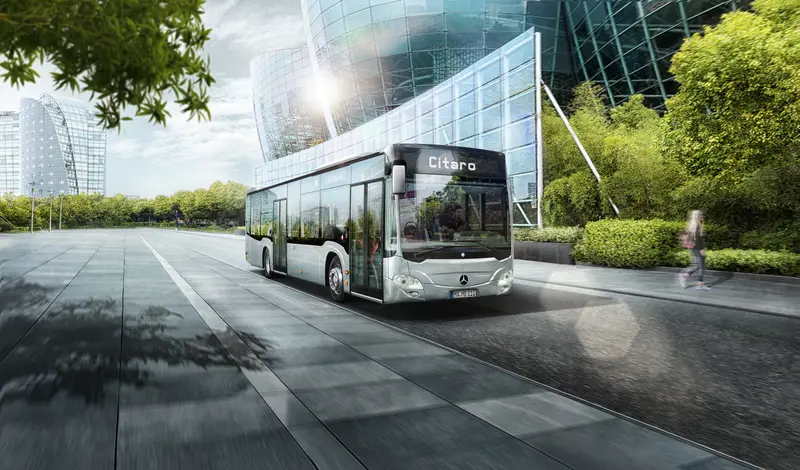
Mercedes-Benz Citaro since 1997: O530 and C2 generations, K, G, LE and Ü versions, OM 906, OM 457, OM 936 and OM 470 engines, and what to check on a used Citaro.
Read the article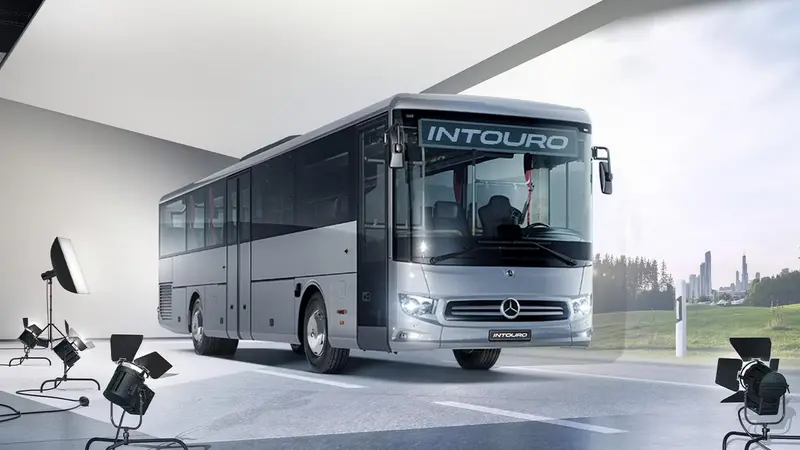 Models
 7 min read
Mercedes-Benz Integro (1996-2018) and Intouro (since 1999): generations, lengths, seats, engines and which intercity bus suits regional and school routes.
Read the article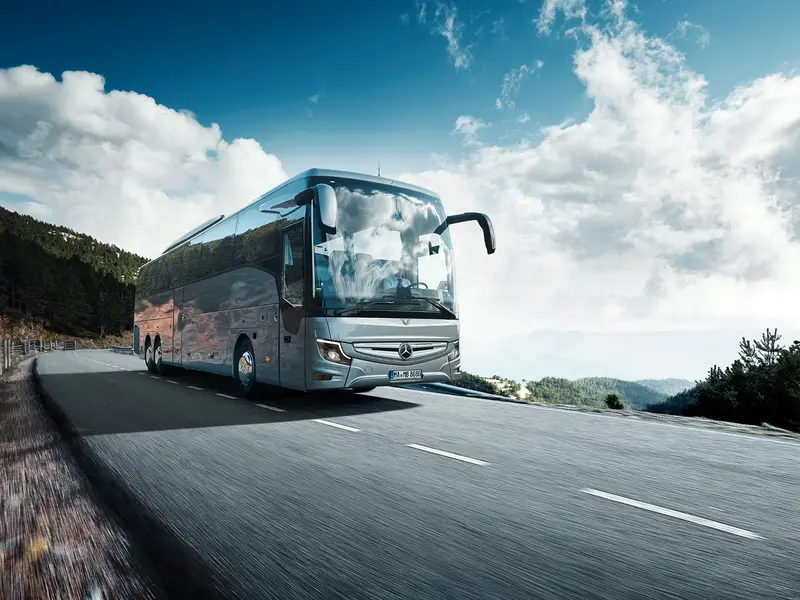 Models
 7 min read
Mercedes-Benz Tourismo since 1994: three generations, the 15, 16 and 17 RHD versions, lengths, seats, engines and what to check on a used Tourismo coach.
Read the articleCall or message us: we tell you what we have in stock and search for what we do not.