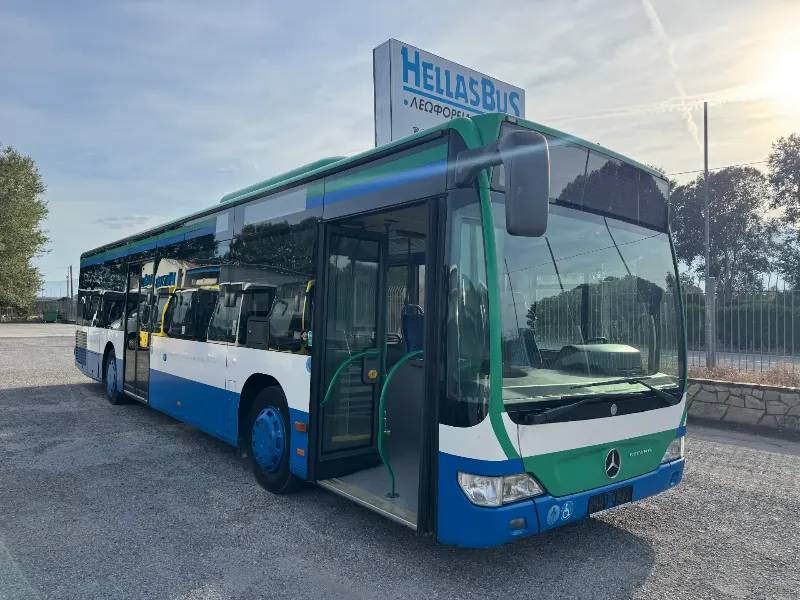
City bus
MERCEDES-BENZ CITARO
- Year of manufacture
- 2010
- Mileage
- 585,095 km
- Gearbox
- AUTOMATIC
- Emission class
- EURO 5
€16,900 + VAT
More...
Mercedes-Benz bus engines from 1954 to today: what OM 457 hLA, OM 906, OM 936 and OM 470 mean, displacement, power and which Citaro, Tourismo or Integro has which.
 The HellasBus team 13 min read
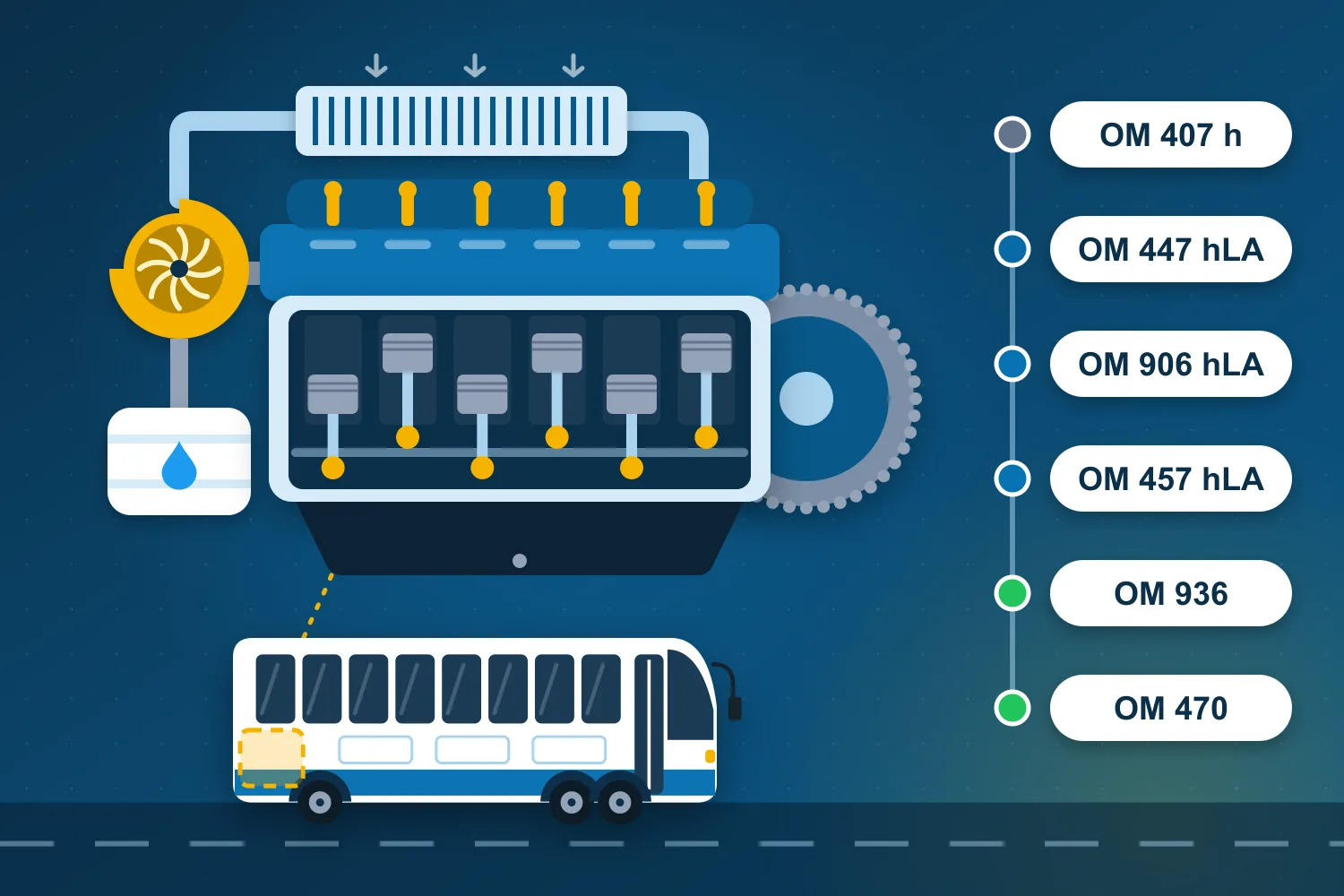
Mercedes-Benz bus engines are identified by their code: OM means diesel engine, the number is the series and the letters describe the mounting and the charging. The OM 457 hLA, for example, is a 12-litre six-cylinder diesel, mounted horizontally, with intercooler and turbocharger, and it powered the Citaro and Integro up to Euro 5.
If you are looking at a used Mercedes bus, the engine code tells you its era, its emission class, whether it needs AdBlue and what power to expect. Below you will find what the letters mean, the history from 1954 to today, tables with displacement and power, and which models got which engine.
OM stands for Ölmotor, meaning a diesel engine, while a plain M marks a spark-ignition engine, such as the natural gas engines. The three-digit number is the series, and the small letters after it describe how the engine is mounted and charged.
| Letter | German | Meaning |
|---|---|---|
| OM | Ölmotor | Diesel engine |
| M | Motor | Spark-ignition engine (petrol or natural gas) |
| h | horizontal, liegend | Horizontal (“lying”) engine under the floor |
| L | Ladeluftkühlung | Intercooler, cooling of the charge air |
| A | Abgasturbolader | Exhaust turbocharger |
| G | Gas | Natural gas (CNG or biomethane) |
So the OM 447 hLA is a 447-series diesel, horizontal, with intercooler and turbocharger, and the M 447 hLAG is its natural gas version. The same engine mounted upright is written without the h: OM 457 LA in the Tourismo coach, OM 457 hLA in the Citaro city bus. For the Euro VI engines, Mercedes-Benz catalogues simply say OM 936 or OM 470, and OM 936 h for the horizontal version.
A horizontal engine fits under the floor, so the floor can stay low and level. When the Integro intercity bus moved to upright Euro 6 engines, its floor had to rise towards the rear.
Since the 1950s, Mercedes-Benz buses have mostly used inline six-cylinder diesels, the exceptions being the V6, V8 and V10 engines of the O 303 and O 404 coaches. Displacement grew from 5.1 litres in the O 321 H to 12 litres in the OM 457, and in the Euro VI era the main engines have 7.7 and 10.7 litres.
| Period | Buses | Engines | Power |
|---|---|---|---|
| 1954 to 1964 | O 321 H | OM 321, 5.1 l | 81 kW (110 hp) |
| 1957 to 1976 | O 317 | OM 326, 10.8 l, from 1964 OM 346 | 147 kW (200 hp) to 210 hp |
| 1965 to 1976 | O 302 | OM 352, OM 327, OM 360, OM 355 | 93 to 176 kW |
| 1969 to 1987 | O 305 | OM 360, from 1973 OM 407 h | 125 to 177 kW |
| 1974 to 1992 | O 303 (coach) | V6, V8 and V10 of the OM 400 series | 141 to 235 kW, later also turbo |
| 1984 to 2001 | O 405, O 405 N, O 407, O 408 | OM 447 h, hA, hLA and M 447 hG | 150 to 220 kW |
| 1991 to 1999 | O 404 (coach) | V6 and V8 | 150 to 280 kW |
| 1996 to 2013 | Integro, Citaro, Tourismo, Travego | OM 447 hLA, OM 906 hLA, OM 457 hLA and LA | 170 to 315 kW |
| Since 2011 | Citaro, Intouro, Tourismo, Travego | OM 936, OM 470, OM 471, M 936 G | 220 to 375 kW |
The O 321 H of 1954 was Mercedes-Benz’s big bus success of the 1950s, with 18,083 units built up to 1964 according to Daimler Truck. It had the 5.1-litre OM 321 six-cylinder diesel with 81 kW (110 hp).
The O 317, from 1957, had its engine under the floor, between the axles. The 10.8-litre OM 326 delivered 147 kW (200 hp), and from 1964 the direct-injection OM 346 followed. The O 302 (1965 to 1976, 32,281 units) offered four naturally aspirated direct-injection six-cylinders, from the 5.7-litre OM 352 to the 11.6-litre OM 355, with 126 to 240 hp.
The O 305 city bus started in 1969 with the 8.7-litre OM 360 and from 1973 received the horizontal OM 407 h six-cylinder, with 132 to 177 kW. The OM 407 h set the pattern Mercedes-Benz kept in its city buses for decades: an inline six, lying flat at the rear.
The O 303 coach (1974 to 1992) had rear-mounted V6, V8 and V10 engines, naturally aspirated at first, with 141 to 235 kW. The top engine was the OM 403 V10 with 320 hp, later replaced by the turbocharged OM 402 A V8 with 330 hp. Daimler also describes the O 303 as the world’s first bus with ABS.
Its successor, the O 404 (1991 to 1999), kept V6 and V8 engines, with 150 to 280 kW (204 to 381 hp). After 1996 only the 280 kW version remained.
The OM 447 is a horizontal six-cylinder of about 12 litres (11,967 cc) and powered the O 405 city bus (1984 to 2001), the low-floor O 405 N and the O 407 and O 408 intercity buses. It started naturally aspirated (OM 447 h), gained a turbocharger (hA) and then an intercooler (hLA), with 150 to 220 kW depending on the model.
The first-generation Integro (1996) also had the OM 447 hLA, Euro 2, with 184 or 220 kW and later 257 kW. For natural gas there was the M 447 hG, encapsulated under the rear floor of the O 405 N.
The OM 457 is an inline six-cylinder diesel of 11,967 cc (128 mm bore, 155 mm stroke), built from 1998 to 2013. In buses you find it as the horizontal OM 457 hLA in the Citaro and Integro, and as the upright OM 457 LA in the Tourismo and Travego coaches.
| Version | Mounting | Buses | Power |
|---|---|---|---|
| OM 457 hLA | Horizontal | Citaro, Citaro G, Integro (from 2001) | 185 to 300 kW |
| OM 457 LA | Upright | Second-generation Tourismo, Travego | 260 to 315 kW |
It has unit injectors with up to 1,800 bar and a compression ratio of 18.5:1. Across trucks and buses the series covers 185 to 335 kW. The Euro 5 version weighs about 1,015 kg dry.
The OM 457 went through every emission class of its time:
For the limits of each class, see our article on Euro 5, EEV and Euro 6. The difference matters in practice: a Euro 3 OM 457 has a simpler exhaust system, while a Euro 5 needs AdBlue but is accepted in more contracts and cities.
The 900 series was introduced in 1996 and built in Mannheim. The OM 906 hLA is a horizontal 6.4-litre six-cylinder (6,374 cc) and was the lighter Citaro engine up to Euro 5 and EEV, with 170 to 205 kW.
In August 2006 Mercedes-Benz delivered the first Euro 5 Citaros, with the OM 906 hLA at 205 kW (279 hp) and 1,120 Nm at 1,300 rpm. The 900 series also includes:
For natural gas, the Citaro CNG had the M 447 hLAG, a development of the M 447 hG with turbocharger and intercooler. It delivered 185 kW in the solo bus and 240 kW in the articulated bus.
The Euro VI engines in Mercedes-Benz buses are the OM 936 (7.7 litres), the OM 470 (10.7 litres), the OM 471 (12.8 litres) and the M 936 G natural gas engine. All are inline six-cylinders, and the diesels have common-rail injection, a turbocharger, SCR with AdBlue and a particulate filter.
| Engine | Displacement | Power | Torque | Mercedes-Benz buses |
|---|---|---|---|---|
| OM 936 / OM 936 h | 7.7 l | 175 to 260 kW (238 to 354 hp) | 1,000 to 1,400 Nm | Citaro, Citaro K, Citaro G, Intouro, Integro, Tourismo (two-axle, 2017) |
| OM 470 | 10.7 l | 265 to 335 kW (360 to 456 hp) | 1,700 to 2,200 Nm | Citaro, Citaro G, Integro L, Intouro L, Tourismo |
| OM 471 | 12.8 l | 350 or 375 kW (476 or 510 hp) | 2,300 or 2,500 Nm | Travego, Setra TopClass |
| M 936 G | 7.7 l, natural gas | 222 kW (302 hp) | 1,200 Nm | Citaro NGT |
The figures come from the official Mercedes-Benz Euro VI bus engine portfolio and the model data sheets. The portfolio also lists the 5.1-litre OM 934 four-cylinder, which Mercedes-Benz supplies to other bus manufacturers.
The OM 471 was presented in 2011, first in the Actros truck. The first bus with it was the Travego Edition 1, shown at Busworld in October 2011. The smaller OM 470 arrived in 2012 and became the engine of large city buses and coaches.
In 2016 Mercedes-Benz launched a new generation of the OM 470, with injection pressure raised from 900 to 1,160 bar, an asymmetric turbocharger and a new top rating of 335 kW (456 hp). Today every Tourismo has the OM 470 with 265 to 335 kW, Euro VI E.
The OM 936 was presented in March 2012 and went into the Citaro the same year. Mercedes-Benz describes the Citaro as the world’s first regular-service bus to meet Euro VI. It comes in two mountings:
Since 2018 the Citaro hybrid has a 14 kW electric motor between the engine and the gearbox, with supercapacitors on the roof. Mercedes-Benz quotes up to 8.5% lower fuel consumption, and the system works with the OM 936 or the M 936 G. The Intouro also uses the OM 936 with 220 kW, or 260 kW as an option, while the three-axle Intouro L has the OM 470 with 290 kW.
The M 936 G is based on the OM 936 and runs only on natural gas or biomethane. It delivers 222 kW (302 hp) and 1,200 Nm and powers the Citaro NGT, presented at Busworld 2015. According to Mercedes-Benz, it emits up to 10% less CO₂ than a diesel on natural gas and is almost CO₂-neutral on biomethane. Madrid alone ran 672 Citaro NGT buses in 2019.
You will find more about each model in our articles on the Citaro, the Tourismo and the Integro and Intouro.
Sprinter minibuses use engines from Mercedes-Benz vans, not bus engines. In 2021 the Sprinter City 75 had the 2.14-litre OM 651 four-cylinder with 120 kW (163 hp), and the Sprinter Travel 75 the 2.98-litre OM 642 V6 with 140 kW (190 hp), both with the 7G-TRONIC PLUS automatic gearbox.
From September 2021 the Sprinter range moved to the 2-litre OM 654 four-cylinder. Because versions change often, check the engine code in the documents. What 516 and 519 mean is explained in our article on the Sprinter minibus.
The quickest way is the plate and the number on the engine block, which starts with the series, for example 457. If you cannot get to the engine, the displacement in field P.1 of the registration document almost always gives the series away.
| Displacement in the documents | Likely engine | Era |
|---|---|---|
| About 6,370 cc | OM 906 hLA | Citaro up to Euro 5 and EEV |
| About 7,200 cc | OM 926 LA | Up to Euro 5 and EEV |
| About 7,700 cc | OM 936 or M 936 G | Euro VI, from 2012 |
| 10,677 cc | OM 470 | Euro VI, from 2012 |
| 11,967 cc | OM 447 (up to Euro 2) or OM 457 (Euro 3 to EEV) | 1984 to 2013 |
| 12,809 cc | OM 471 | Euro VI, coaches |
The power in field P.2 and the emission class in field V.9 confirm the version. A Citaro with 11,967 cc and Euro 5, for example, has an OM 457 hLA with SCR, so it needs AdBlue.
Check the cold start, smoke, crankcase blow-by, oil leaks and the service history. On Euro 4 and Euro 5 buses, make sure the AdBlue system works properly, and on Euro VI buses ask for the particulate filter history.
All the points, including those beyond the engine, are in our pre-purchase inspection checklist. For how to look after the engine once you own the bus, see our maintenance tips.
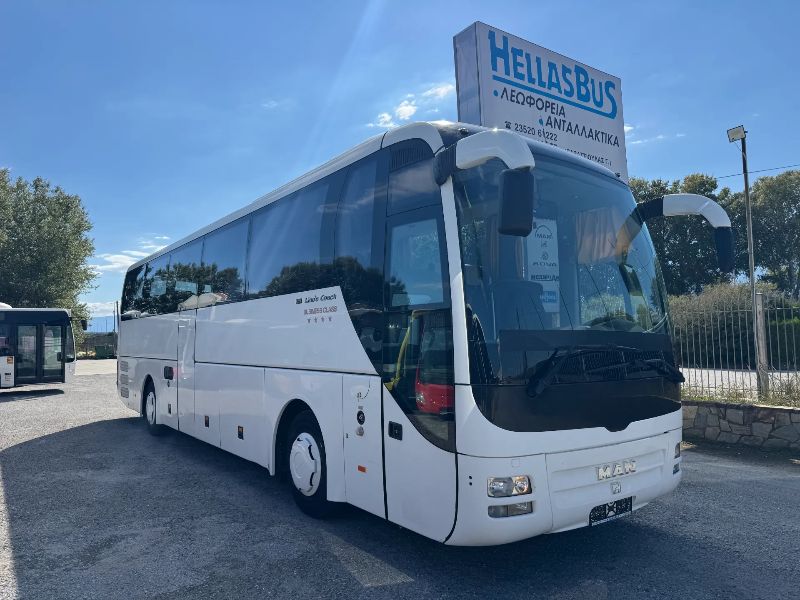
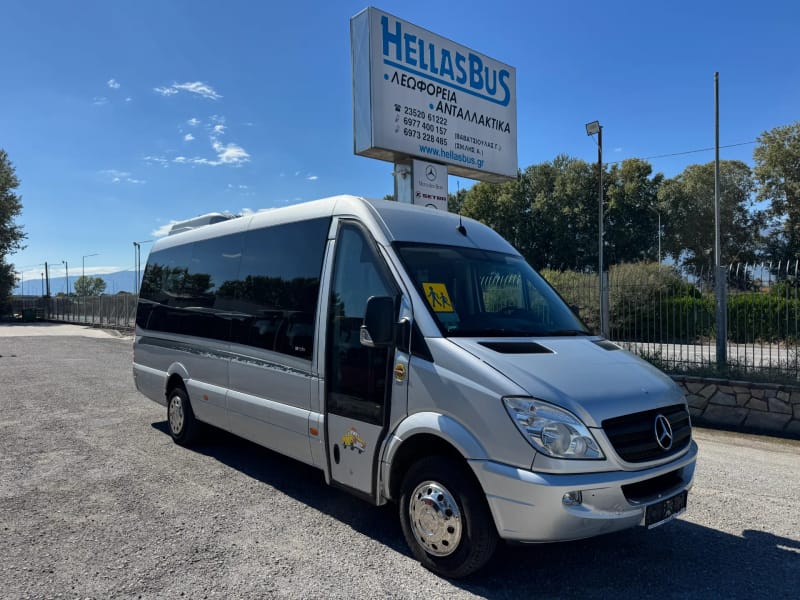
Buses we own, parked at our premises in Litochoro, Pieria, ready to be inspected.
City bus
€16,900 + VAT
More...Intercity / tourist coach
€51,900 + VAT
More...Intercity / tourist coach
€29,900 + VAT
More...Yes, in city buses as well as intercity buses and coaches. Mercedes-Benz keeps developing the diesel engines for its buses, and the OM 936 and OM 470 still go into new buses today.
On city routes, the Citaro is offered with the OM 936 and OM 470. There is also a hybrid version, in which a small electric motor assists the diesel and cuts fuel consumption by up to 8.5%. Transport operators in many European countries continue to choose it.
For intercity buses and coaches, the 2026 data sheets for the Intouro and Tourismo list Euro VI E diesel engines. In September 2026 it was also reported that from 2027 Mercedes-Benz and Setra coaches will get revised OM 470 and OM 471 engines, with up to 6% lower fuel consumption.
Diesel remains a practical choice for every kind of work. It offers a long range, refuels in a few minutes at any filling station and needs no special infrastructure at the depot.
For anyone buying used, this is good news. Parts, diagnostics and mechanics for the OM 936 and OM 470 will be around for many years. The older engines have a large base too: by 2013, one million engines of the 900 series, which includes the OM 906, had already been built.
In the HellasBus catalogue every bus lists its emission class, power, mileage and gearbox. You will find the Citaro, the Tourismo, the Integro and Intouro and the Sprinter.
If you want a specific engine, for example an OM 470 for mountain routes or an OM 457 without AdBlue, tell us and we will tell you what we have or what we can source. Call +30 23520 61222 or send a WhatsApp message to +30 6977 400157.
OM stands for diesel engine (Ölmotor). The h means it is mounted horizontally under the floor, L stands for intercooler (Ladeluftkühlung) and A for turbocharger (Abgasturbolader). The OM 457 LA is the same engine mounted upright, as in the Tourismo and Travego coaches.
Both are Euro VI six-cylinder diesels. The OM 936 has 7.7 litres and in buses delivers up to 260 kW (354 hp) and 1,400 Nm. The OM 470 has 10.7 litres and delivers 265 to 335 kW (360 to 456 hp) and up to 2,200 Nm, which is why it goes into articulated buses, three-axle buses and coaches.
Up to Euro 5 and EEV, the Citaro had the 6.4-litre OM 906 hLA or the 12-litre OM 457 hLA. Since 2012, Euro VI Citaros have the OM 936 (7.7 litres) or the OM 470 (10.7 litres), and the Citaro NGT has the M 936 G natural gas engine.
It depends on the emission class. Euro 3 versions have no SCR. Euro 4, Euro 5 and EEV versions in Mercedes buses have a BlueTec SCR system and need AdBlue. Check the emission class in the registration document.
Look at the plate and the number on the engine block, which starts with the series, for example 457. Also compare the displacement and power in the registration document (fields P.1 and P.2): 11,967 cc means an OM 447 or OM 457, and 10,677 cc means an OM 470.
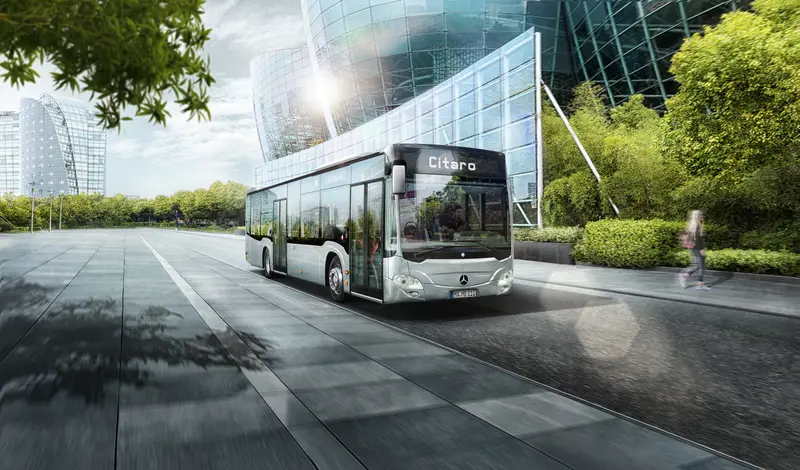 Models
 7 min read
Mercedes-Benz Citaro since 1997: O530 and C2 generations, K, G, LE and Ü versions, OM 906, OM 457, OM 936 and OM 470 engines, and what to check on a used Citaro.
Read the article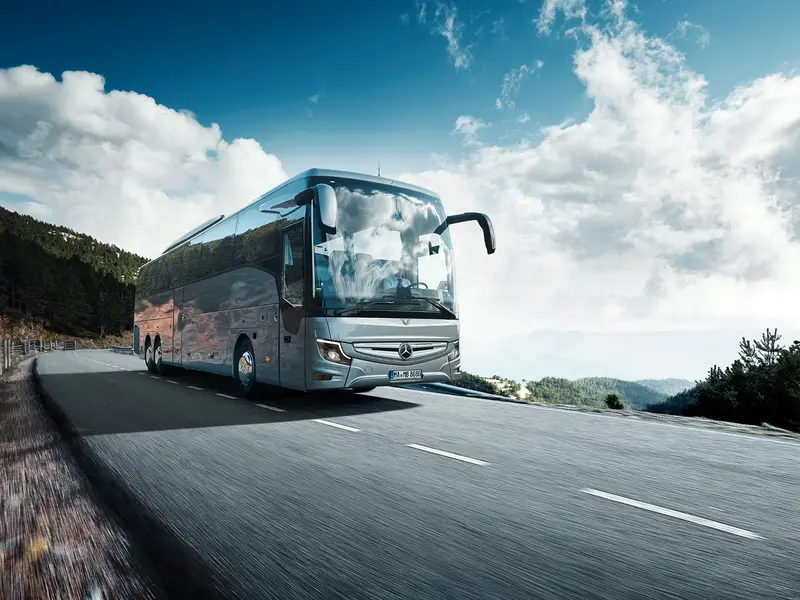 Models
 7 min read
Mercedes-Benz Tourismo since 1994: three generations, the 15, 16 and 17 RHD versions, lengths, seats, engines and what to check on a used Tourismo coach.
Read the article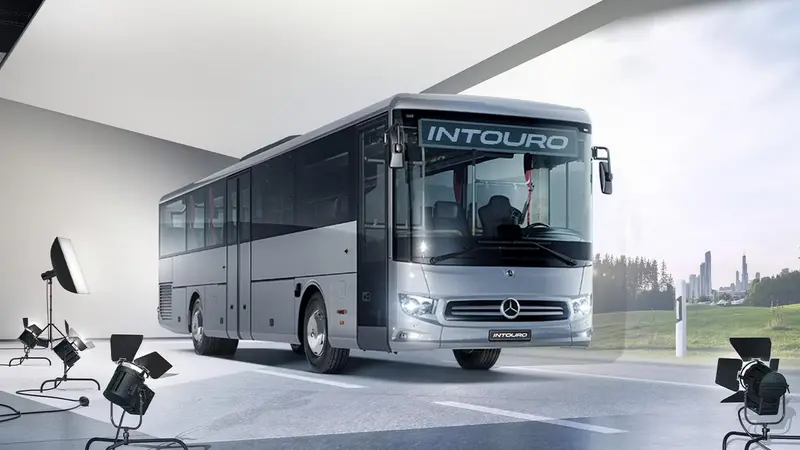 Models
 7 min read
Mercedes-Benz Integro (1996-2018) and Intouro (since 1999): generations, lengths, seats, engines and which intercity bus suits regional and school routes.
Read the articleCall or message us: we tell you what we have in stock and search for what we do not.